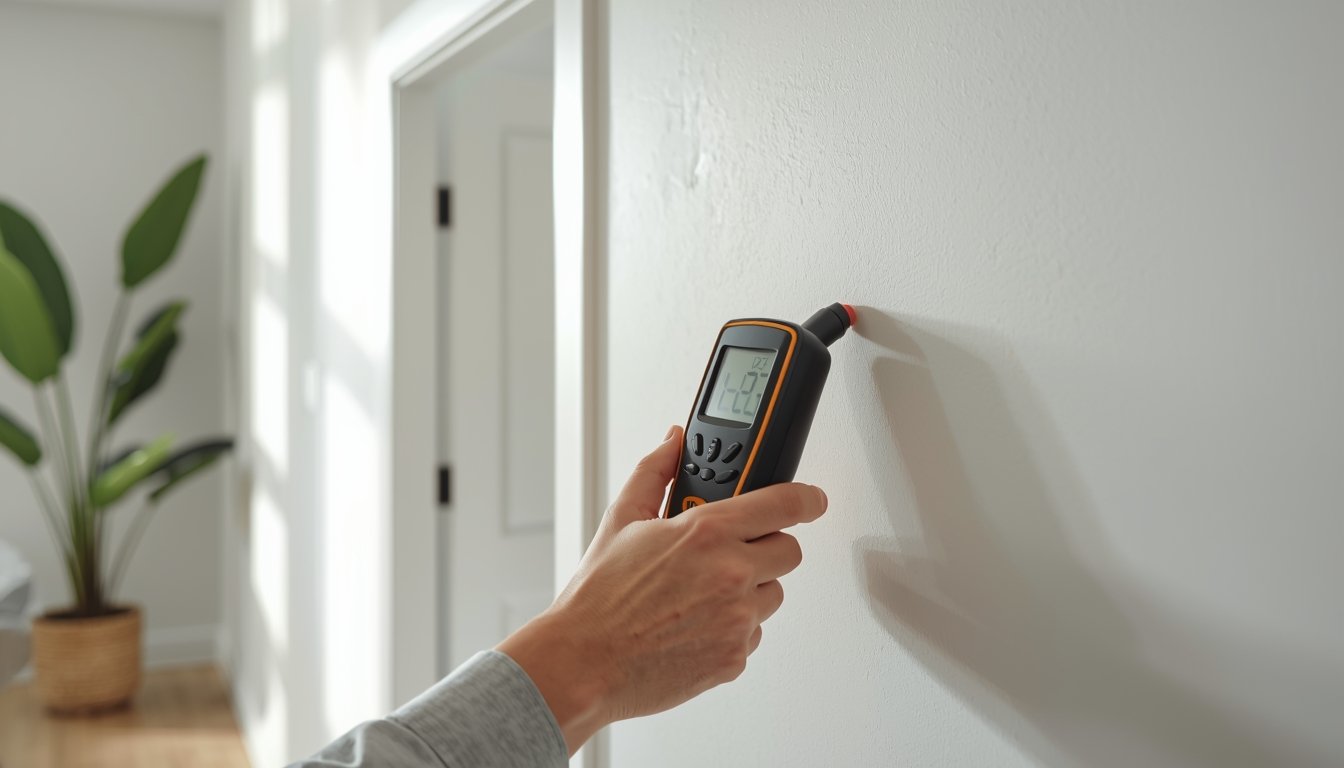
Finding the best moisture meter is not just about choosing the most expensive model. For most homeowners, the better choice depends on what you need to check, how often you plan to use it, and whether you prefer pin or pinless scanning. A simple pin meter can work well for occasional spot checks, while a more advanced pinless or dual-function model can be better for larger areas, repeated testing, or more detailed inspection work.
This guide compares five moisture meters that cover the main buying needs most people have: budget testing, general home use, material-specific accuracy, non-invasive scanning, and professional inspection work.
Quick Picks
- Best overall for whole-home moisture checks: Klein Tools ET140 Pinless Moisture Meter
- Best for detailed follow-up inspection work: Protimeter SurveyMaster Dual-Function Moisture Meter
- Best for non-invasive wall scanning: General Tools Moisture Meter MMD950 – Humidity Sensor
- Best budget option for basic checks: General Tools MMD4E Digital Moisture Meter
- Best for wood-focused accuracy: Lignomat Mini-Ligno E/D Pin Moisture Meter
Klein Tools ET140 Pinless Moisture Meter

A pinless meter suited to general household checks on walls, drywall, and other common building surfaces.
This is the strongest overall choice for most people because it keeps the process simple. A pinless design is easier to use across painted walls and finished surfaces when you want a quick reading without leaving holes behind. That makes it a practical fit for routine home checks, leak follow-up, and damp investigations in common living areas.
Best for: Homeowners who want broad coverage and easy scanning without damaging surfaces.
Advantage: Faster and cleaner for general household testing than a basic pin meter.
Limitation: It is less suited to highly specific wood-moisture work where pin readings are often preferred.
Protimeter SurveyMaster Dual-Function Moisture Meter
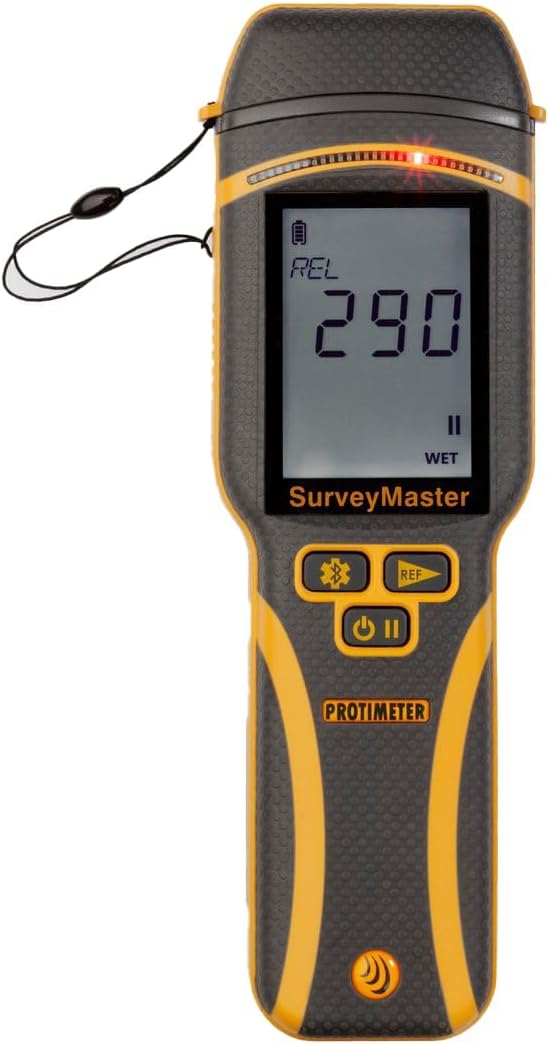
A dual-function model that combines pin and pinless testing for broader inspection work and follow-up verification.
If you want one tool that can scan a surface and then confirm a suspect area more precisely, this is the most complete option in the group. The dual-mode setup is useful when you move beyond basic home checks and want more confidence in how you test different materials and problem areas.
Best for: More advanced users, repeated investigations, and contractor-style inspection work.
Advantage: Offers more flexibility than a single-mode meter.
Limitation: Higher cost than simpler homeowner-focused models.
General Tools Moisture Meter MMD950 – Humidity Sensor
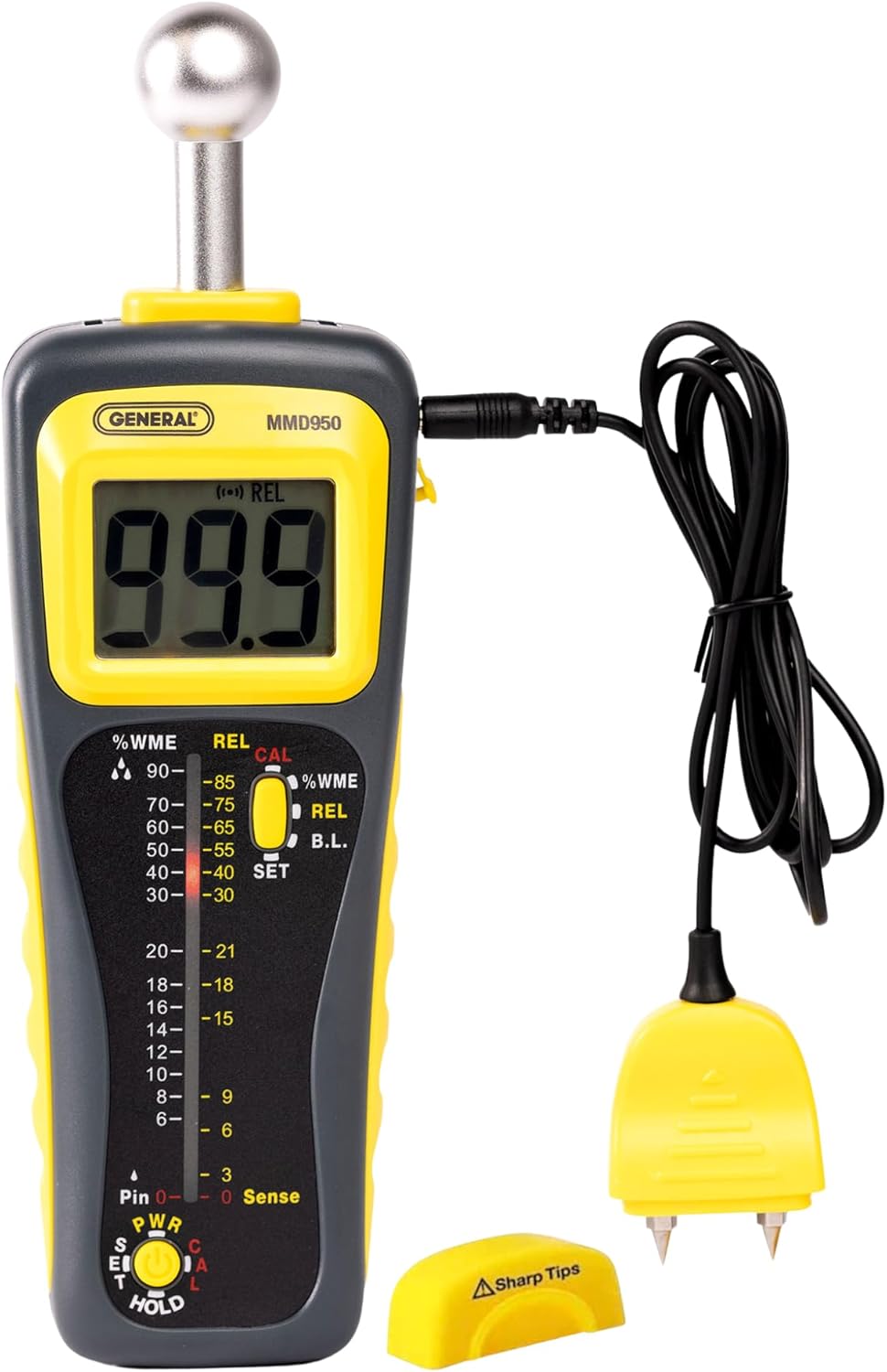
A pinless meter aimed at scanning walls and surfaces where non-invasive testing is the priority.
This model makes sense when your main concern is checking drywall, painted surfaces, or other areas where pin holes are not ideal. It fits well for tracing suspicious damp spots, checking around leaks, and scanning awkward wall sections quickly.
Best for: Pinless scanning on walls, ceilings, and other finished surfaces.
Advantage: Useful when you want to cover more area without surface damage.
Limitation: Less focused on wood-specific precision than a dedicated pin meter.
General Tools MMD4E Digital Moisture Meter

A straightforward entry-level pin meter for basic moisture checks in wood and common building materials.
This is the practical choice if you want something simple and lower-cost for occasional use. It gives you a basic way to check suspicious areas without paying for professional-level features that many casual users may not need.
Best for: Budget-conscious buyers who want a simple starting point.
Advantage: Lower cost and easy to understand.
Limitation: More limited in convenience and flexibility than the stronger pinless or dual-mode options.
Lignomat Mini-Ligno E/D Pin Moisture Meter
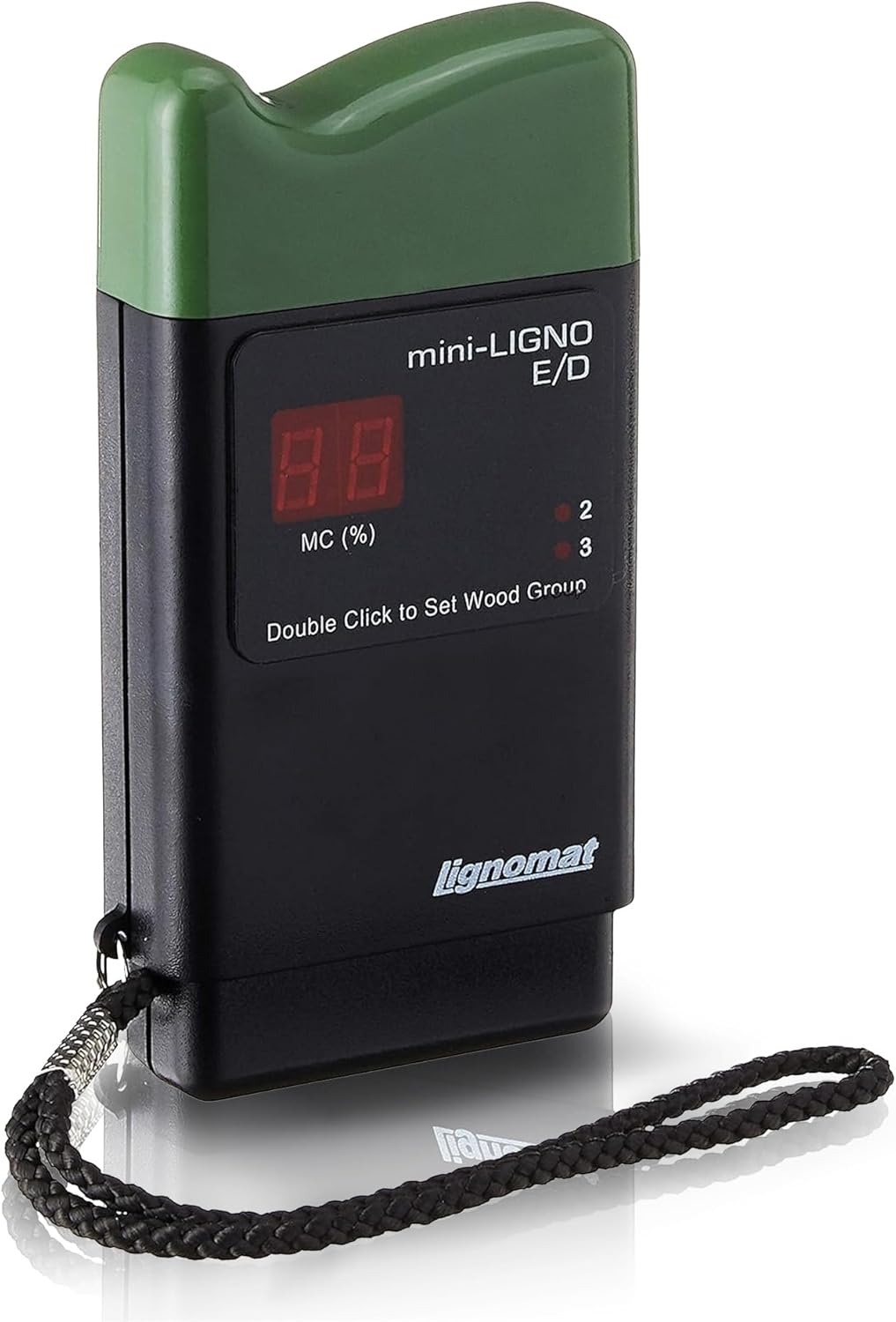
A more precision-focused pin meter suited to users who care about material-specific readings, especially on wood.
This is the strongest fit for buyers who care more about material accuracy than convenience. It is better suited to woodworking, trim, flooring, and other tasks where a direct pin reading is often preferred over broad surface scanning.
Best for: Wood-focused testing and buyers who want more targeted readings.
Advantage: Stronger fit for users who prioritize material-specific accuracy.
Limitation: Less convenient for quick non-invasive scans across finished wall surfaces.
What to Look For
- Choose a pinless meter if you want to scan painted walls, drywall, or finished surfaces without leaving marks.
- Choose a pin meter if you care more about direct readings in wood or other materials where precision matters.
- Consider a dual-function model if you want one tool for both scanning and confirming suspicious areas.
- Think about where you will use it most often: walls, floors, trim, under sinks, or around leak-prone areas.
- Do not overpay for professional features if you only need occasional household checks.
Final Recommendation
For most buyers, the Klein Tools ET140 Pinless Moisture Meter is the best overall choice because it is the easiest match for common home use. It offers a cleaner way to scan typical household surfaces and makes sense for people who want a practical meter for general damp checks, leak follow-up, and routine inspection around the home.
If you want the lowest-cost entry point, the General Tools MMD4E Digital Moisture Meter is the better fit. If you want a more advanced tool for broader inspection work, the Protimeter SurveyMaster Dual-Function Moisture Meter is the stronger step up.