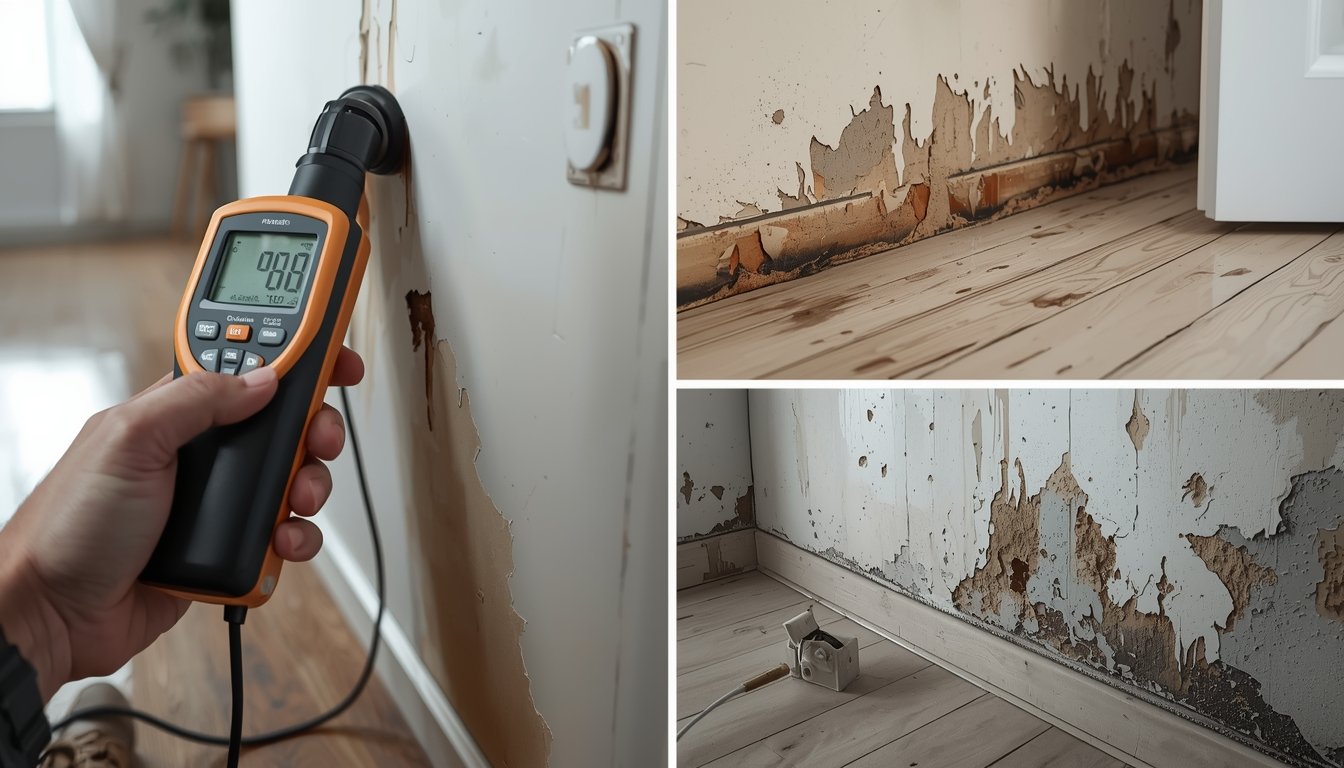
A moisture meter can tell you when moisture is present, but it can’t always tell you how serious the problem is. In many cases, elevated readings can be handled with simple fixes, but certain patterns and conditions indicate when professional help is needed.
The key is knowing when a reading goes beyond normal variation and points to a deeper issue. If you’re unsure how to interpret readings in context, it helps to understand how moisture meters work and when to use them so you can recognise when a situation requires expert attention.
Signs That Moisture Readings Indicate a Serious Problem
- Consistently high readings: Elevated levels that do not change over time
- Spreading moisture patterns: Increasing area of affected readings
- Multiple affected materials: Wood, drywall, and flooring all showing high values
- Visible damage present: Stains, warping, or mold alongside high readings
Not all high readings are cause for concern, but consistent and widespread moisture usually indicates a more serious issue. If readings remain high over time, it suggests that moisture is still entering or trapped within the structure.
Spreading patterns are another warning sign. If the affected area is growing, the problem may be active and worsening. This often points to ongoing water intrusion or poor drainage.
When multiple materials are affected, the issue is likely more significant. For example, if both drywall and flooring show elevated readings, moisture may have penetrated deeper into the structure.
Visible damage combined with high readings is a strong indicator that professional assessment may be needed. These signs often mean the problem has progressed beyond a minor issue.
Recognising these patterns early can help you take action before the damage becomes more severe.
When Moisture Readings Suggest Hidden Structural Issues
- High readings in structural areas: Beams, joists, or load-bearing walls
- Unexplained moisture: No visible source of water
- Deep or persistent readings: Moisture detected below the surface
- Recurring problems: Moisture returns after drying or repairs
Moisture detected in structural components is a serious concern. These areas are critical to the integrity of the home, and prolonged exposure to moisture can weaken them over time.
Unexplained moisture is another warning sign. If you cannot identify a clear source, the problem may be hidden behind walls, under floors, or within the structure itself.
Deep readings, especially when using a pin meter, suggest that moisture has penetrated beyond the surface. This often requires more advanced inspection to fully assess the extent of the issue.
Recurring moisture problems indicate that the underlying cause has not been resolved. This is a common situation where professional help is needed to identify and fix the root problem.
In these cases, relying solely on surface-level checks may not be enough to fully understand the issue.
How to Differentiate Minor vs Major Moisture Issues
Not every elevated reading requires professional intervention. Understanding the difference between minor and major issues helps you decide when to act.
Minor issues often involve slightly elevated readings that remain stable or decrease over time. These can be caused by temporary conditions such as humidity or recent water exposure.
Major issues, on the other hand, involve consistently high readings, spreading moisture, or visible damage. These signs suggest that the problem is ongoing and may worsen if not addressed.
Location also plays a role. Moisture near high-risk areas such as basements or roofs may require closer attention than isolated readings in less critical areas.
Comparing readings across multiple areas helps you determine whether the issue is localised or widespread.
By understanding these differences, you can avoid unnecessary repairs while still addressing serious problems promptly.
When DIY Fixes Are No Longer Enough
Many moisture issues can be resolved with simple fixes, but there are situations where DIY solutions are not sufficient.
If you have already addressed obvious causes such as leaks or ventilation issues and readings remain high, it may indicate a deeper problem.
Persistent moisture often requires specialised equipment to locate hidden sources or assess structural damage. This is beyond what most homeowners can do with basic tools.
Attempting to fix complex issues without proper knowledge can sometimes make the problem worse. For example, sealing a surface without addressing the source of moisture can trap water inside materials.
Professional assessment ensures that the root cause is identified and resolved correctly.
Knowing when to stop and seek help is an important part of managing moisture problems effectively.
What Professionals Can Do That You Can’t
Professionals have access to tools and expertise that go beyond standard moisture meters. This allows them to identify and resolve issues more accurately.
They may use advanced equipment such as thermal imaging cameras, deeper scanning devices, or specialised testing methods to locate hidden moisture.
Professionals can also assess structural damage and determine whether repairs are needed. This is particularly important when moisture affects load-bearing components.
In addition to identifying the problem, they can recommend and carry out appropriate solutions. This may include repairs, drying processes, or improvements to drainage and ventilation.
Having a professional assessment provides clarity and reduces the risk of missing hidden issues.
In many cases, it also helps prevent future problems by addressing the root cause.
How to Monitor After Professional Intervention
Even after professional help, monitoring moisture levels is important to ensure the problem has been fully resolved.
Using your moisture meter to check affected areas over time helps confirm that readings are returning to normal.
If readings remain stable or decrease, it indicates that the issue has been successfully addressed.
If readings begin to rise again, it may suggest that the problem has not been fully resolved or has returned.
Regular monitoring is especially important in areas where moisture problems have occurred before. This helps you detect any recurrence early.
By combining professional intervention with ongoing monitoring, you can maintain a dry and stable environment in your home.