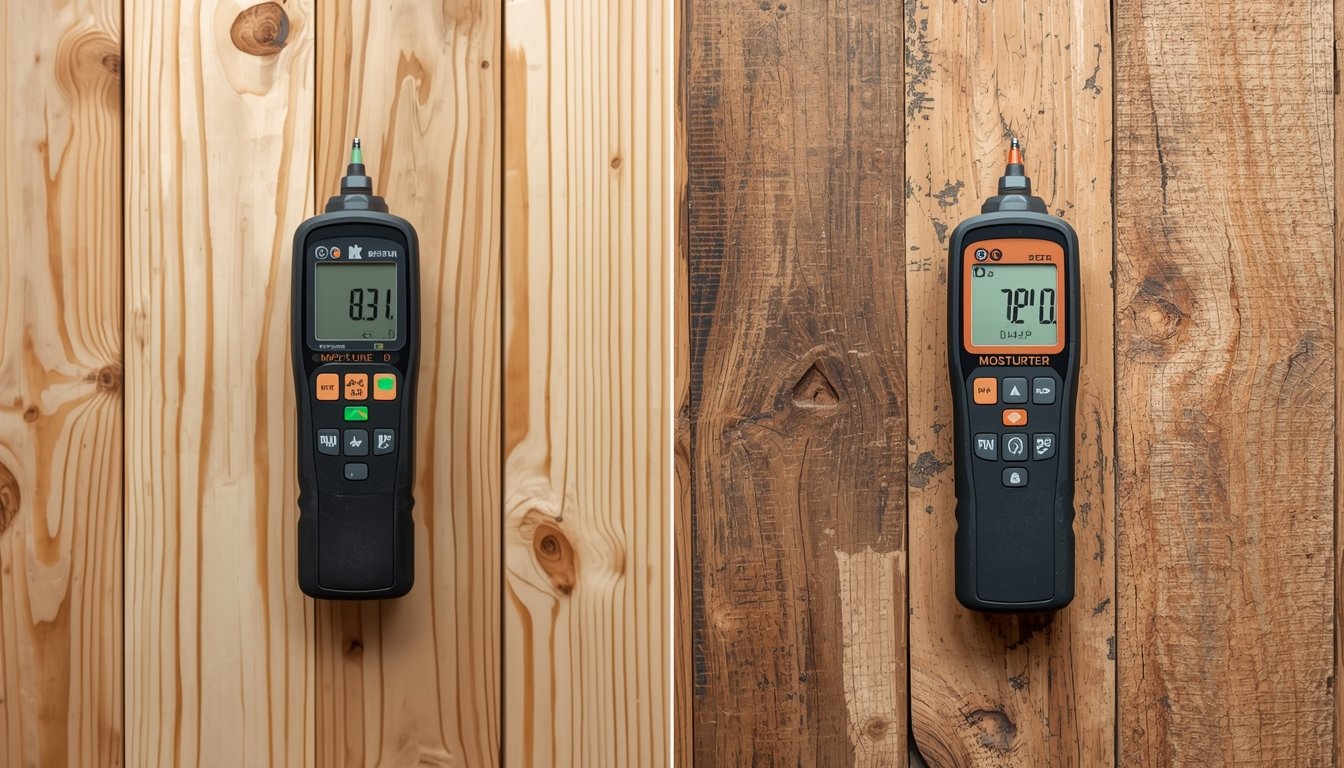
A moisture meter is a handheld tool used to detect moisture levels inside materials like wood, drywall, and flooring. It works by measuring changes in electrical resistance or electromagnetic signals to identify hidden damp before it becomes visible damage.
For homeowners, it’s one of the most effective ways to detect leaks, prevent mold, and confirm whether materials are dry enough for repairs or renovations. If you’re new to using one, it helps to start by learning how to use a moisture meter on walls, since walls are one of the most common areas where moisture problems develop.
How Moisture Meters Work
- Pin meters: Use probes inserted into the material to measure electrical resistance
- Pinless meters: Use electromagnetic signals to scan beneath the surface
- Moisture detection: Changes in moisture affect how signals move through materials
- Reading output: Displayed as a percentage or relative scale depending on the device
Moisture meters do not directly detect water itself. Instead, they measure how moisture affects the material being tested. This is why readings can vary depending on the surface, density, and environmental conditions.
In practical use, the most important function of a moisture meter is comparison. A higher reading in one area compared to surrounding surfaces usually indicates a problem, even if the exact number isn’t perfectly precise.
Pin meters provide more precise readings at a specific depth because they measure internal moisture directly. However, they require small holes in the material. Pinless meters, on the other hand, allow you to scan large areas quickly without damaging surfaces.
For most homeowners, pinless meters are easier to use for general checks, while pin meters are useful when you need to confirm moisture at a specific point.
When You Should Use a Moisture Meter
- Checking for leaks: Identify hidden water behind walls or under floors
- Inspecting damp areas: Confirm whether stains or marks indicate moisture
- Before renovations: Ensure materials are dry before painting or installing flooring
- Monitoring problem areas: Track moisture levels over time
Moisture meters are most useful when you suspect a problem but don’t have visible proof. For example, a wall may look completely dry while still holding moisture from a slow leak or condensation.
They are also valuable after water damage. Even when surfaces appear dry, moisture can remain trapped inside materials. If left untreated, this can lead to mold growth or structural damage over time.
Another important use is during home inspections. A quick scan across high-risk areas can reveal hidden problems that wouldn’t be detected through visual checks alone.
Using a moisture meter regularly in areas like bathrooms, kitchens, and basements can help you catch issues early and avoid more serious repairs later.
How to Use a Moisture Meter Effectively
Using a moisture meter correctly is essential for getting reliable results. Even a high-quality device can produce misleading readings if used incorrectly.
The first step is establishing a baseline. Testing a known dry area gives you a reference point so you can recognise what normal readings look like in your home.
Once you have a baseline, you can compare other areas to identify differences. Moisture problems usually show up as higher readings in specific spots rather than evenly across a surface.
It’s also important to take multiple readings. A single measurement doesn’t give a complete picture, but consistent readings across an area can confirm whether moisture is present.
Moving slowly across surfaces in a grid pattern helps you detect changes more accurately. This method is especially useful for identifying hidden moisture behind walls or under flooring.
A common mistake is scanning too quickly or relying on one reading. Taking your time and comparing results across different areas improves accuracy significantly.
Understanding Moisture Meter Readings
Interpreting moisture meter readings correctly is just as important as taking them. Different materials and meter types use different scales, so understanding what the numbers mean is essential.
For wood, readings are typically shown as a percentage. Indoor wood is usually considered dry between 6% and 12%, while higher values may indicate excess moisture or potential damage.
For drywall and other materials, readings are often relative rather than exact percentages. In these cases, the focus should be on comparing readings across different areas rather than relying on a specific number.
Consistent high readings in one location usually indicate trapped moisture. If readings remain elevated over time, it suggests an ongoing issue that needs attention.
Environmental factors such as temperature and humidity can also affect readings slightly. This is why it’s important to compare results rather than treat them as absolute values.
Understanding these patterns helps you avoid false assumptions and focus on areas that genuinely need investigation.
Common Mistakes to Avoid
Many issues with moisture meters come from how they are used rather than the device itself. Avoiding these mistakes helps ensure accurate and reliable readings.
One of the most common mistakes is relying on a single reading. Moisture meters are comparison tools, so multiple readings are essential for identifying patterns.
Another issue is testing over painted, sealed, or tiled surfaces without considering how they affect readings. These surfaces can sometimes distort results and lead to false conclusions.
Using the wrong material setting is another frequent problem. This can cause readings to appear higher or lower than they actually are, making it harder to interpret the results.
Testing too quickly or without full contact can also reduce accuracy. Taking your time and ensuring consistent contact with the surface improves reliability.
By avoiding these common mistakes, you can use your moisture meter more effectively and get results you can trust.