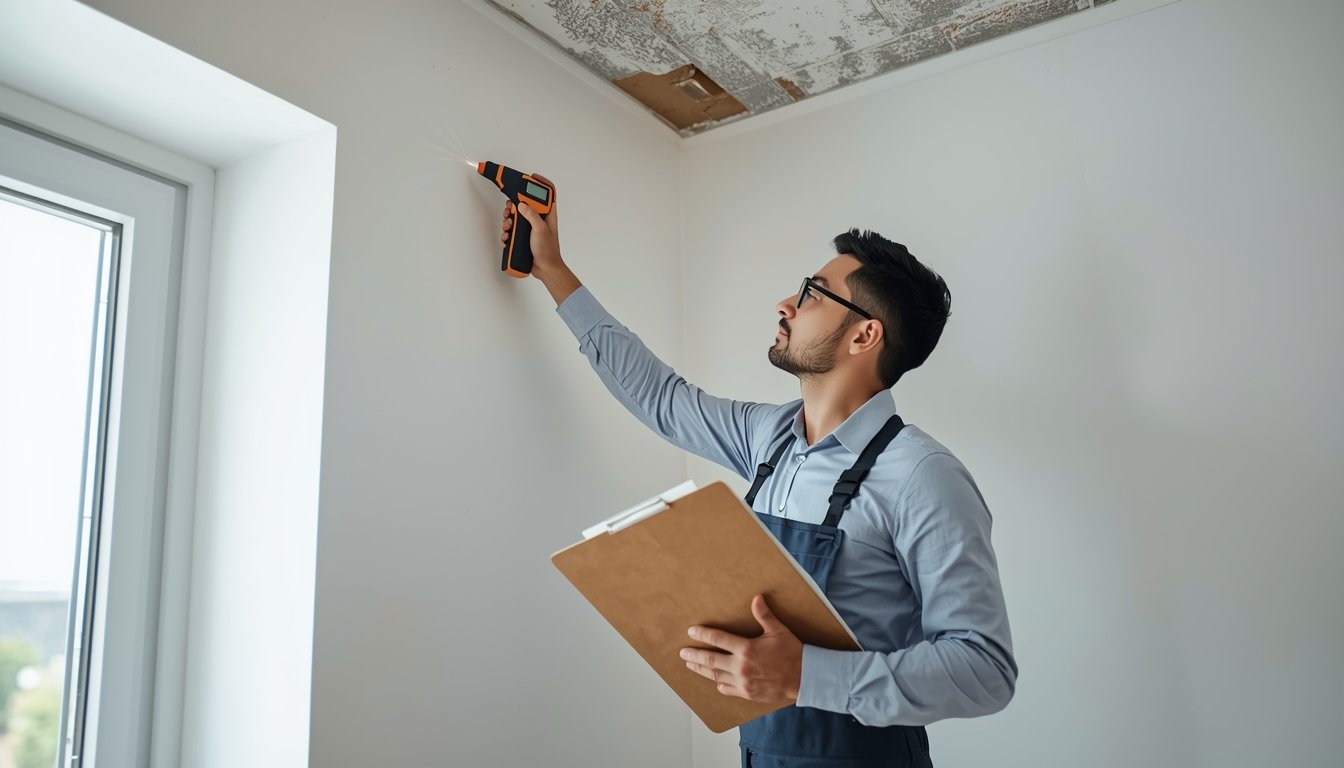
Moisture meters are used in professional building inspections to help identify areas where excess moisture may be present in materials such as drywall, wood, and flooring. Inspectors use them to support visual findings, compare suspect areas with dry areas, and assess whether further investigation may be needed.
They are not used as a stand-alone diagnosis tool. In professional inspections, moisture meters are one part of a broader process that may also include visual inspection, site history, thermal imaging, and judgment based on building conditions.
How It Works
Moisture meters estimate moisture levels in materials in one of two main ways. Pin meters use metal probes inserted into the material to measure electrical resistance, while pinless meters use sensors to scan beneath the surface without penetration.
In building inspections, pinless meters are often used first to scan larger areas quickly. If an area appears abnormal, a pin meter may then be used to confirm whether moisture is present at a more specific point.
This helps inspectors gather more than one type of reading before drawing conclusions about a wall, ceiling, floor, or wood surface.
What It Can Do
- Help identify areas that may contain elevated moisture
- Support inspection of walls, ceilings, floors, and wood components
- Compare readings between suspect and non-suspect areas
- Assist with tracing the possible spread of water intrusion
- Provide additional evidence when staining, odor, swelling, or damage is visible
- Help determine whether further investigation or specialist assessment may be appropriate
Limitations / What It Cannot Do
Moisture meters do not identify the exact source of a leak on their own. They can show that a material appears wetter than expected, but they do not explain why the moisture is there.
They also do not directly detect mold, structural damage, or contamination. A high reading may indicate moisture conditions that could contribute to those issues, but the meter itself does not confirm them.
Readings can also be affected by the material being tested. Surface coatings, density differences, metal behind walls, salts, and other hidden conditions can influence results. Because of this, readings must be interpreted in context rather than treated as absolute proof by themselves.
Professional inspectors also know that some meters are better for comparative readings than exact moisture content values, especially when testing building materials rather than unfinished wood.
When It Works Best
Moisture meters work best when they are used as part of a structured inspection process. This includes checking areas with visible staining, water damage history, suspected leaks, condensation concerns, or changes in material condition.
They are especially useful when comparing one area against another. For example, an inspector may test a stained section of drywall and then test a nearby section that appears normal. That comparison can help show whether the suspect area is behaving differently.
They are also useful when access is limited and the goal is to gather non-destructive information before opening walls or removing finishes.
Common Misconceptions
A moisture meter does not “see through walls” in a complete or diagnostic sense. It can help detect abnormal moisture conditions near or below the surface, but it does not provide a full picture of everything inside the wall.
A high reading does not always mean there is an active leak. It may reflect older moisture, material variation, or another factor affecting the reading.
A normal reading does not always prove that no problem exists. If moisture is hidden deeper than the meter’s effective range, or conditions are inconsistent, other inspection methods may still be needed.
Professional inspectors do not rely on one reading alone. They use moisture meters to support findings, not replace inspection judgment.
Final Answer Summary
Moisture meters are used in professional building inspections to help detect elevated moisture in materials and support further investigation. They are useful for scanning suspect areas, comparing conditions, and confirming whether moisture may be present.
They are most effective when used alongside visual inspection and other diagnostic methods. They provide valuable information, but they do not identify the exact cause of moisture or confirm every related problem on their own.