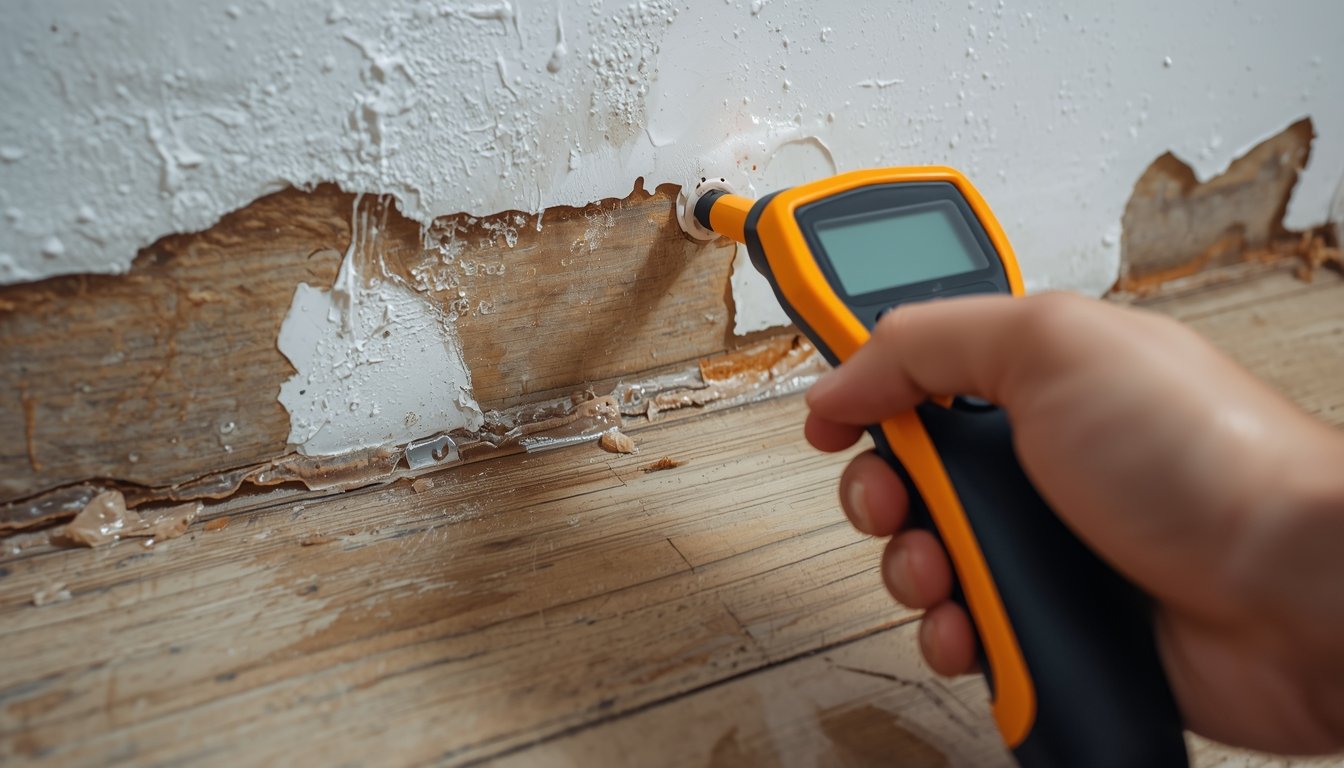
Diagnosing damp problems with a moisture meter involves more than just taking a reading—it requires comparing results, identifying patterns, and linking those readings to likely causes. A moisture meter helps you detect where damp is present, but the real value comes from interpreting what those readings mean.
By following a structured approach, you can move from simply detecting moisture to understanding the source and severity of the problem. If you’re new to this process, it helps to first understand how moisture meters work and when to use them so you can interpret readings correctly.
Step 1: Establish a Dry Baseline Before Testing
- Test a known dry area: Choose an interior wall away from moisture sources
- Take multiple readings: Confirm consistency across that area
- Note the range: This becomes your reference for comparison
- Check different materials: Wood and drywall will show different baseline values
Before diagnosing any damp issue, you need to know what “normal” looks like in your home. Without a baseline, it’s difficult to determine whether a reading is actually high.
Start by selecting an area that is unlikely to be affected by moisture, such as an interior wall or a well-ventilated room. Take several readings across this surface to confirm that the values are stable.
This baseline becomes your reference point. Any readings that are significantly higher than this range may indicate a problem.
It’s also important to recognise that different materials behave differently. Wood, drywall, and masonry will all produce different readings, so your baseline should reflect the material you are testing.
Taking the time to establish a baseline ensures that your diagnosis is based on comparison rather than guesswork.
Step 2: Scan Systematically to Locate Damp Areas
- Move in a grid pattern: Cover walls evenly from top to bottom
- Focus on high-risk areas: Near floors, windows, and plumbing
- Take multiple readings: Avoid relying on a single measurement
- Mark problem spots: Note areas with consistently higher readings
Once you have a baseline, the next step is to scan the area systematically. This helps you identify where moisture is present and how it is distributed.
Move the meter slowly across the surface, working in horizontal and vertical passes. This grid approach ensures that you don’t miss any sections.
Pay special attention to high-risk areas such as the base of walls, around windows, and near plumbing fixtures. These are common locations for damp problems.
As you scan, look for areas where readings are consistently higher than the baseline. These spots are likely to contain moisture beneath the surface.
Marking or noting these areas allows you to return to them for further testing and helps you build a clearer picture of the problem.
Step 3: Interpret Patterns to Identify the Type of Damp
Once you’ve identified areas with elevated readings, the next step is understanding what type of damp you’re dealing with. Different patterns often point to different causes.
If readings are higher near the base of a wall and decrease as you move upward, this may indicate rising damp from ground moisture. This pattern is common in older homes or areas with poor drainage.
If elevated readings are concentrated around windows or ceilings, condensation or leaks are more likely causes. These issues are often linked to ventilation or external water entry.
Localized high readings near plumbing fixtures often indicate leaks. In these cases, the moisture is usually confined to a specific area.
Understanding these patterns helps you move beyond detection and begin diagnosing the root cause of the problem.
This step is critical because the solution depends on the type of damp you are dealing with.
Step 4: Confirm the Source of Moisture
After identifying the likely type of damp, you need to confirm the source. This ensures that you address the underlying issue rather than just the symptoms.
Check nearby areas for potential sources such as pipes, roof sections, or external walls. Moisture often travels, so the highest reading may not be directly at the source.
Expanding your inspection area can help you trace the path of moisture and locate where it is entering the structure.
In some cases, retesting over time is useful. If readings remain high or increase, it indicates that the source is still active.
Visual signs such as stains, peeling paint, or musty odors can also help confirm the presence of moisture and support your findings.
Combining readings with observation gives you a more reliable diagnosis.
Step 5: Assess the Severity of the Problem
Not all damp problems require immediate major repairs. Understanding the severity helps you decide what action to take.
Slightly elevated readings that remain stable may indicate minor moisture that can be managed with improved ventilation or monitoring.
Consistently high readings, especially those that increase over time, suggest a more serious issue that needs prompt attention.
Widespread elevated readings across a room may point to humidity or condensation issues rather than a localized leak.
Localized high readings are more likely to indicate a specific problem such as a leak or water intrusion.
By assessing severity, you can prioritise your response and avoid unnecessary repairs while still addressing real issues.
Step 6: Take Action and Monitor Results
Once you’ve diagnosed the problem, the final step is taking action and ensuring the issue is resolved.
Start by addressing the source of moisture. This may involve repairing leaks, improving drainage, or increasing ventilation.
After making changes, continue to monitor the affected areas using your moisture meter. This helps confirm that moisture levels are returning to normal.
Regular checks are important, especially in areas where damp problems have occurred before. This allows you to catch any recurring issues early.
Moisture meters are not just diagnostic tools—they are also useful for ongoing monitoring and prevention.
By combining accurate diagnosis with consistent follow-up, you can effectively manage damp problems and protect your home from long-term damage.