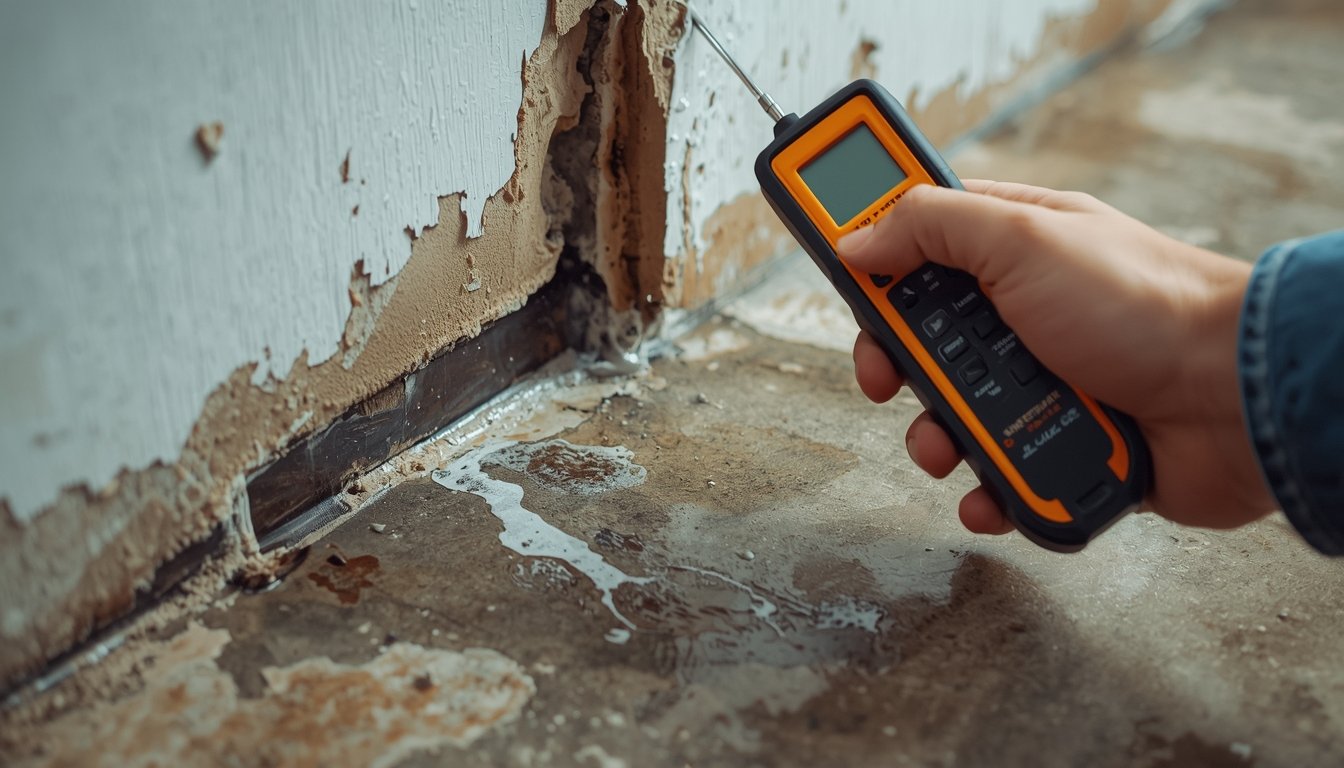
High moisture readings in a home usually point to underlying issues like leaks, humidity buildup, or poor ventilation. While a single high reading doesn’t always mean there’s a serious problem, consistent elevated readings in specific areas often indicate moisture that needs attention.
The key is understanding what causes these readings so you can identify whether the issue is temporary or something that requires action. If you’re unsure how to interpret results, it helps to understand how moisture meters work and when to use them so you can compare readings correctly.
Leaks and Water Intrusion
- Plumbing leaks: Hidden pipe leaks behind walls or under floors
- Roof leaks: Water entering from damaged roofing or flashing
- External water intrusion: Rain entering through cracks or gaps
- Appliance leaks: Dishwashers, washing machines, and water heaters
Leaks are one of the most common causes of high moisture readings in homes. Even a slow leak can introduce enough moisture to affect building materials over time.
Plumbing leaks are often hidden behind walls or under floors, making them difficult to detect without a moisture meter. Elevated readings in a specific area are often the first sign of a problem.
Roof leaks can also cause moisture to spread through ceilings and walls. In many cases, the visible damage appears far from the actual source, which can make the issue harder to trace.
External water intrusion is another common cause. Water can enter through small cracks, poorly sealed windows, or damaged siding, leading to elevated readings inside the home.
Identifying and fixing leaks early is essential to prevent further damage and avoid long-term issues like mold or structural weakening.
High Indoor Humidity
- Poor ventilation: Limited airflow allows moisture to build up
- Everyday activities: Cooking, showering, and drying clothes
- Seasonal changes: Higher humidity during certain times of year
- Closed environments: Homes with limited air exchange
High indoor humidity is another major cause of elevated moisture readings. Unlike leaks, humidity affects larger areas and can lead to consistently higher readings across multiple surfaces.
Everyday activities like cooking and showering release moisture into the air. Without proper ventilation, this moisture can settle into walls, ceilings, and other materials.
Seasonal changes can also play a role. In humid climates or during certain times of the year, indoor moisture levels can rise even without any obvious source.
Homes with limited airflow are especially vulnerable. Without proper ventilation, moisture has nowhere to go, leading to buildup over time.
Managing humidity through ventilation and airflow is one of the most effective ways to reduce moisture readings across the home.
Condensation on Surfaces
Condensation occurs when warm, moist air comes into contact with cooler surfaces. This is a common cause of moisture buildup, especially in areas like windows, walls, and ceilings.
Unlike leaks, condensation is often temporary but can still lead to elevated readings if it happens frequently.
Windows are one of the most common places where condensation forms. This moisture can spread to surrounding materials, leading to higher readings in nearby walls.
Cold surfaces, such as exterior walls or poorly insulated areas, are also prone to condensation. These areas can show elevated readings even if there is no direct water source.
Over time, repeated condensation can lead to damp conditions and increase the risk of mold growth.
Improving insulation and ventilation can help reduce condensation and prevent moisture from building up on surfaces.
Poor Drainage and Ground Moisture
Moisture from the ground can enter a home if drainage is not properly managed. This is especially common in basements, crawl spaces, and lower levels of a building.
When water accumulates around the foundation, it can seep into walls and floors, leading to elevated moisture readings.
Poor drainage systems, clogged gutters, or improper grading can all contribute to this problem. Water that isn’t directed away from the home can collect and eventually find its way inside.
Ground moisture can also rise through materials, a process often referred to as rising damp. This typically affects the lower sections of walls and floors.
Because this type of moisture is often hidden, it may not be immediately visible. However, a moisture meter can detect elevated readings in affected areas.
Addressing drainage issues is essential to prevent ongoing moisture problems and protect the structure of the home.
Material and Surface Factors
Not all high moisture readings are caused by actual moisture problems. In some cases, the material or surface being tested can influence the results.
Painted or sealed surfaces can affect how moisture meters read, sometimes leading to higher values that don’t reflect true moisture levels.
Metal behind walls, such as nails, pipes, or wiring, can also interfere with readings. This can cause the meter to show elevated values even when the material is dry.
Different materials also respond differently to moisture. Wood, drywall, and concrete each have their own characteristics, which can affect how readings appear.
Understanding these factors helps you avoid misinterpreting results and focusing on the wrong problem.
Comparing readings across different areas is the best way to determine whether a high value is meaningful or caused by external factors.
How to Identify the Real Cause
Determining the cause of high moisture readings requires a combination of observation, testing, and comparison. No single reading provides a complete answer.
Start by comparing readings across multiple areas. This helps you identify patterns and determine whether the issue is localised or widespread.
If high readings are concentrated in one area, a leak or water intrusion is more likely. If readings are elevated throughout a space, humidity or environmental factors may be the cause.
Retesting over time can also provide useful information. If readings remain high or increase, it suggests an ongoing issue that needs attention.
Combining moisture meter readings with visual inspection improves accuracy. Signs like stains, odors, or surface damage can help confirm the cause.
By identifying the source of moisture, you can take the right steps to fix the problem and prevent it from returning.