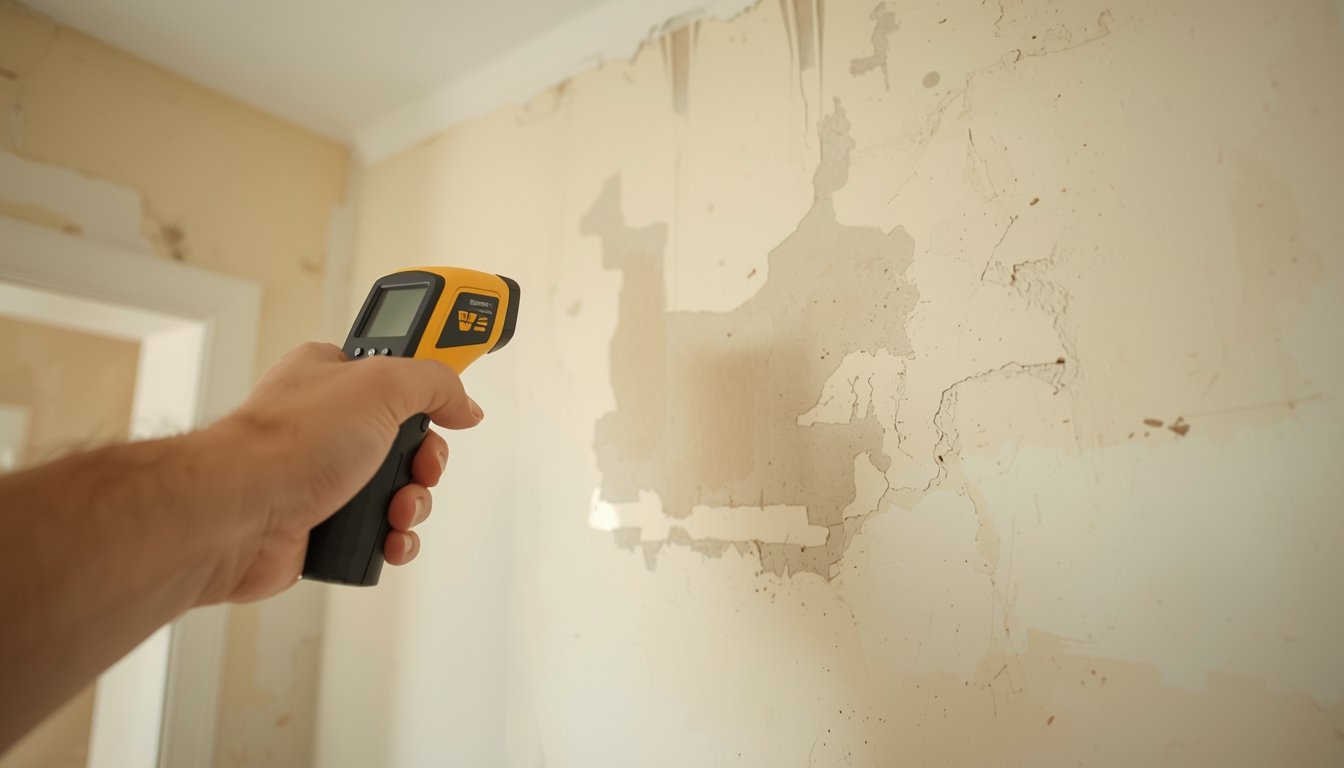
Yes, you can detect water leaks with a moisture meter by identifying areas with higher moisture readings compared to surrounding surfaces. While the meter doesn’t “see” the leak itself, it helps locate where moisture is accumulating, which usually points to the source.
The key is to scan methodically and compare readings to find patterns that indicate hidden water intrusion.
How a Moisture Meter Helps Detect Water Leaks
Moisture meters work by measuring the moisture content within materials like drywall, wood, and flooring. When a leak is present, these materials absorb water, causing readings to rise in that specific area.
Instead of giving you a direct leak location, the meter shows where moisture levels are abnormal. This allows you to narrow down the problem area quickly without opening walls or floors.
- Higher readings in one spot compared to nearby areas
- Gradual increase in readings as you move closer to the source
- Consistent elevated readings in the same location over time
For example, if you scan along a wall and notice readings increasing near the base or around a pipe, it often indicates a leak behind that section.
This makes moisture meters especially useful for detecting slow leaks that don’t immediately show visible damage.
Where to Check for Leaks Using a Moisture Meter
Water leaks tend to occur in predictable areas, so focusing your testing in the right places improves your chances of finding the problem quickly.
Start by checking areas where water systems or external exposure are most likely to cause issues. Then expand your testing outward to confirm the extent of the moisture.
- Under sinks and around plumbing fixtures
- Along the base of walls, especially near bathrooms and kitchens
- Around windows and doors where water can enter
- Ceilings below bathrooms or roofs where leaks may drip down
Always compare readings between suspected areas and known dry sections. This comparison helps confirm whether the readings are truly elevated.
If you’re unsure how to interpret the values, it helps to understand moisture meter readings and scales, so you can determine whether a reading actually indicates a problem.
Limitations and How to Confirm a Leak
While moisture meters are very effective for identifying damp areas, they don’t directly confirm the exact source of a leak. Additional checks are often needed to pinpoint the cause.
Moisture can travel through materials, so the highest reading may not always be directly above or next to the leak itself. This is why it’s important to test multiple areas and look for patterns.
- Retest the area over time to see if readings increase
- Check nearby surfaces to trace the spread of moisture
- Look for visible signs like stains, bubbling paint, or soft spots
A common mistake is assuming that one high reading confirms a leak. In reality, you need consistent elevated readings and supporting signs to be confident.
By combining moisture meter readings with visual inspection, you can quickly narrow down whether a leak is present and where further investigation is needed.