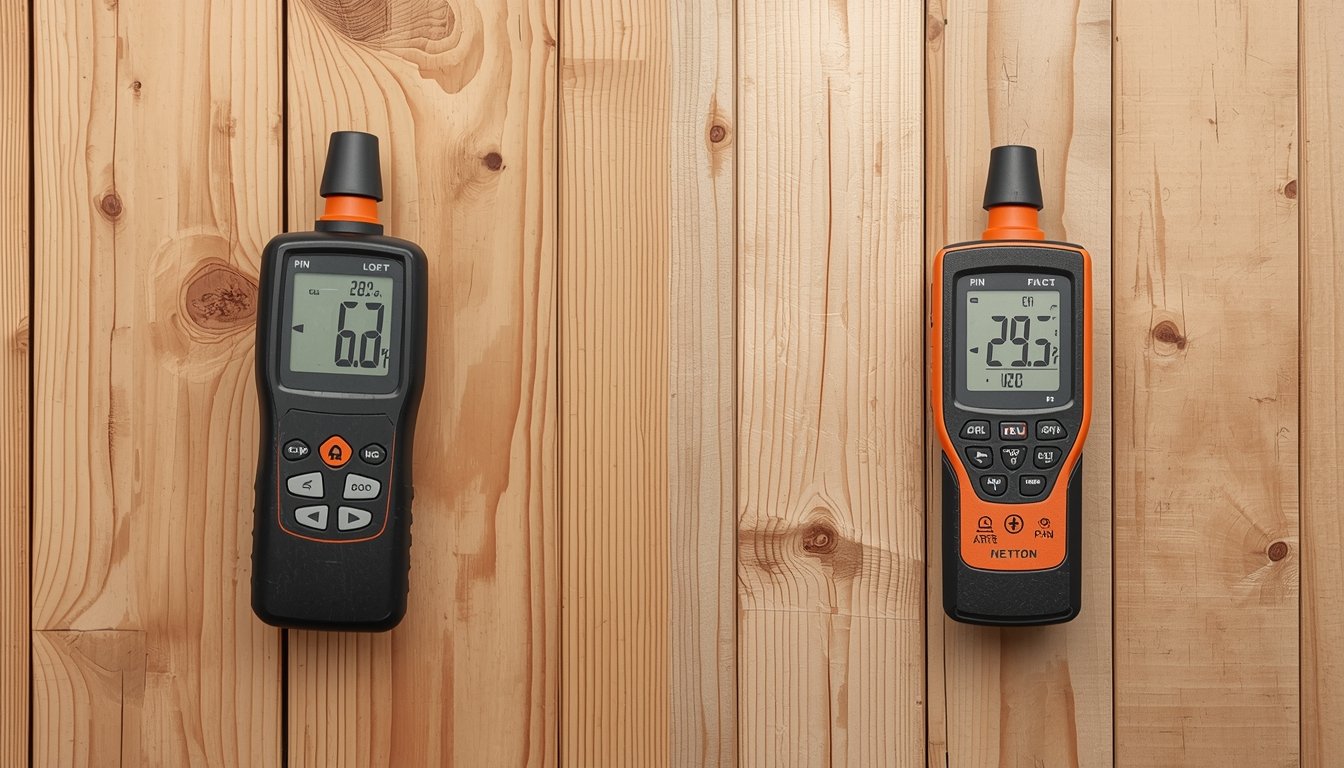
Cheap moisture meters can be worth it for basic checks, but they usually trade accuracy and reliability for lower cost. For simple tasks like identifying obvious damp areas, they can be useful, but they may struggle with consistency and precision.
If you understand their limitations, a budget meter can still help you spot potential moisture problems without a large investment.
What You Get with a Cheap Moisture Meter
Lower-cost moisture meters are designed for basic use, and they often provide enough functionality for general home checks. However, they typically lack the refinement and consistency of higher-end models.
This doesn’t mean they are useless—it just means you need to use them differently and rely more on comparison than exact readings.
- Basic moisture detection: Can identify clearly damp or dry areas
- Simple controls: Limited settings and fewer adjustment options
- Lower build quality: Less durable and more prone to wear
- Reduced accuracy: Greater variation between readings
In practice, a cheap meter is often good enough to tell you if something is obviously wrong. For example, a significantly higher reading in one area compared to another can still highlight a potential issue.
However, the exact numbers may not be as reliable, so they should be used as a guide rather than a precise measurement.
When a Cheap Meter Is Good Enough
For many homeowners, a budget moisture meter is sufficient for occasional use. If your goal is to check for obvious damp or monitor a known issue, a cheaper device can do the job.
The key is to focus on patterns rather than exact values. Comparing readings across different areas helps you identify whether something is wrong.
- Checking for visible damp: Confirming whether stains or marks indicate moisture
- Routine home checks: Monitoring areas like bathrooms or basements
- Basic troubleshooting: Identifying potential leaks or damp spots
In these situations, a cheap meter can provide useful information without the need for a more advanced device.
If you’re unsure how to interpret the readings, it helps to understand moisture meter readings and scales, so you can avoid misreading the results.
When It’s Worth Spending More
There are situations where a cheap moisture meter may not be reliable enough. If accuracy and consistency are important, investing in a higher-quality meter is usually the better option.
This is especially true when you need to make decisions based on the readings or confirm whether a problem is serious.
- Home inspections: Where accurate results are critical
- Detecting hidden moisture: More sensitive and reliable readings are needed
- Professional use: Consistency and durability are essential
Higher-end meters tend to provide more stable readings, better calibration, and improved performance across different materials.
A common mistake is assuming a cheap meter will provide the same level of detail as a professional device. In reality, it’s best used as a basic tool rather than a precise diagnostic instrument.
If you only need occasional checks, a cheap meter can be worth it. But for more serious or repeated use, spending more usually leads to more reliable and useful results.