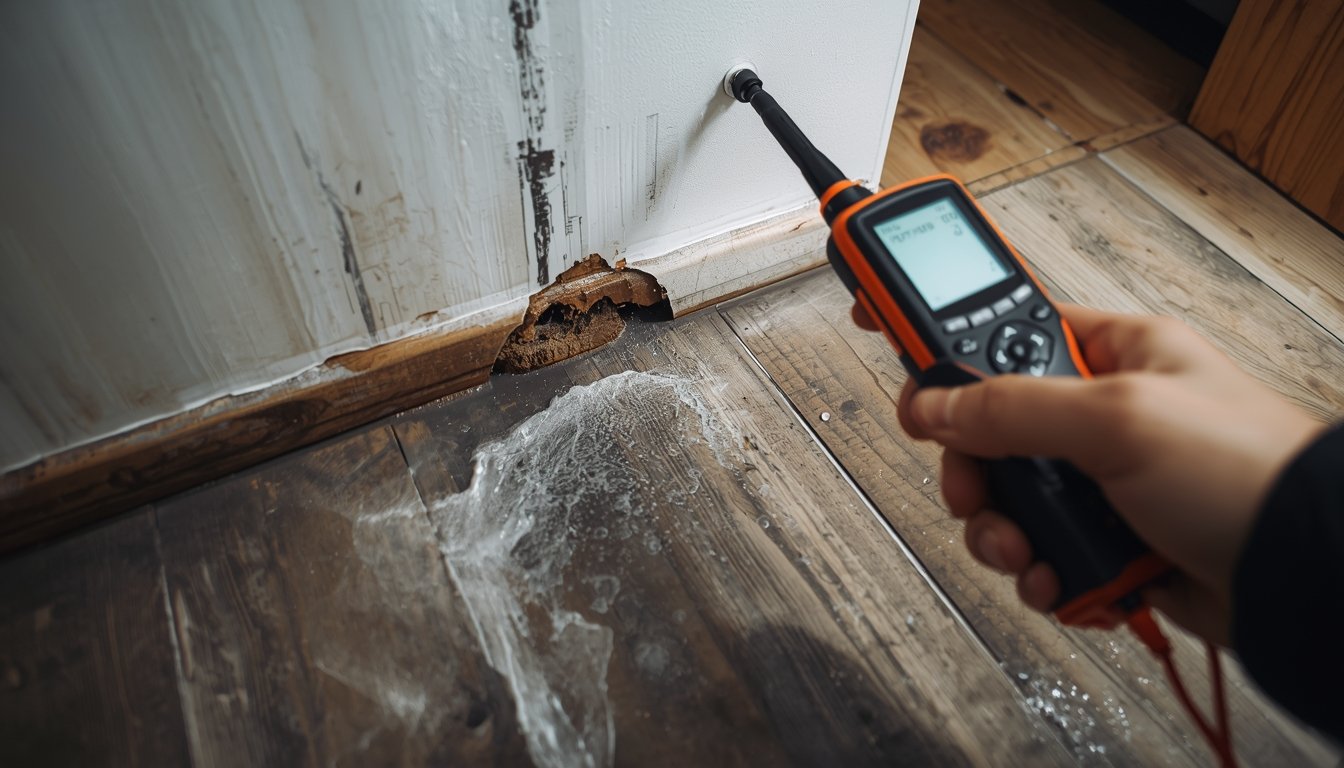
Moisture meter readings show how much moisture is present inside a material, but the numbers only make sense when you understand the scale being used. Different meters display results in different ways, so interpreting the reading correctly is just as important as taking it.
For homeowners, the goal isn’t perfect precision—it’s understanding what’s normal, what’s elevated, and what signals a problem. If you’re unsure how readings fit into the bigger picture, it helps to understand how moisture meters work and when to use them so you can interpret results with confidence.
Types of Moisture Meter Scales Explained
- Percentage scale (wood): Shows actual moisture content as a percentage
- Relative scale: Displays moisture levels without a fixed percentage
- Color-coded zones: Indicates dry, damp, or wet ranges visually
- Reference readings: Used to compare one area against another
Different meters use different scales depending on what they are designed to measure. Wood moisture meters typically use a percentage scale, which gives a direct reading of moisture content. This makes it easier to determine whether the material is within a safe range.
For materials like drywall or concrete, many meters use a relative scale instead of a true percentage. This means the number itself is less important than how it compares to other readings.
Color-coded displays simplify this process by grouping readings into categories such as dry, damp, or wet. These are helpful for quick checks but should still be interpreted carefully.
The key point is that no single number tells the full story. Understanding the type of scale your meter uses helps you avoid misinterpreting the results.
What Moisture Readings Mean for Different Materials
- Wood (6–12%): Typical indoor dry range
- Wood (12–16%): Slightly elevated, may need monitoring
- Wood (16%+): High moisture, risk of damage or mold
- Drywall: Readings should remain low and consistent
Moisture readings vary depending on the material being tested. Wood has clearly defined ranges, which makes it easier to interpret results. For example, indoor wood is generally considered dry between 6% and 12%.
As moisture levels increase, the risk of damage also increases. Wood above 16% moisture content may begin to warp, weaken, or support mold growth if conditions persist.
Drywall and other materials are less straightforward because they often use relative scales. In these cases, you are looking for changes in readings rather than specific numbers.
For example, if one section of wall reads significantly higher than another, it suggests moisture is present even if the exact value is unclear.
Understanding these differences helps you interpret readings more accurately across different parts of your home.
Why Comparing Readings Matters More Than Exact Numbers
One of the most important principles when using a moisture meter is comparison. A single reading doesn’t tell you much on its own, but comparing multiple readings can quickly reveal a problem.
Start by testing a known dry area to establish a baseline. This gives you a reference point so you can recognise when readings are elevated elsewhere.
Once you have a baseline, scan nearby areas and look for differences. Moisture problems usually appear as higher readings in specific locations rather than evenly across a surface.
For example, if most of a wall reads low but one section shows a higher value, that area may have hidden moisture behind it.
This approach is more reliable than relying on a single number, especially when using a relative scale meter.
By focusing on patterns rather than exact values, you can identify moisture issues more accurately and avoid false assumptions.
Common Mistakes When Interpreting Readings
Many people misinterpret moisture meter readings because they focus too much on the number and not enough on the context. Avoiding these common mistakes improves accuracy and confidence.
One of the biggest mistakes is assuming that a high reading always indicates a serious problem. In some cases, surface conditions or materials can affect the result.
Another issue is using the wrong material setting. This can cause readings to appear higher or lower than they actually are, leading to incorrect conclusions.
Testing only one spot is also a common mistake. Without comparison, it’s difficult to know whether a reading is normal or elevated.
Environmental factors like humidity and temperature can also influence readings slightly, which is why consistency is important when testing.
By understanding these factors, you can avoid misinterpreting readings and focus on areas that genuinely need attention.
How to Get More Reliable Moisture Readings
Getting accurate readings is less about the device and more about how you use it. A consistent testing method makes a significant difference.
Start by testing multiple areas rather than relying on a single reading. This helps you identify patterns and reduces the impact of isolated results.
Hold the meter flat against the surface and ensure full contact. Uneven placement can lead to inconsistent readings.
Move slowly across surfaces in a grid pattern to detect changes in moisture levels. This is especially useful for identifying hidden issues behind walls or under floors.
It’s also helpful to retest areas over time. If readings remain high or increase, it suggests an ongoing problem rather than a temporary condition.
By following a consistent process, you can improve accuracy and make better decisions based on the results.
How to Use Readings to Take Action
Understanding moisture readings is only useful if you know what to do next. Once you identify elevated moisture, the next step is determining whether action is needed.
If readings are slightly elevated, monitoring the area over time may be enough. This helps you see whether the moisture is stable, increasing, or decreasing.
If readings are consistently high, it’s important to investigate the source. This may involve checking for leaks, improving ventilation, or inspecting nearby materials.
In some cases, further testing or professional inspection may be needed to confirm the issue.
The key is to act early. Addressing moisture problems before they become severe helps prevent damage to materials and reduces the risk of mold.
By using moisture meter readings as a guide, you can take practical steps to maintain a dry and healthy home environment.