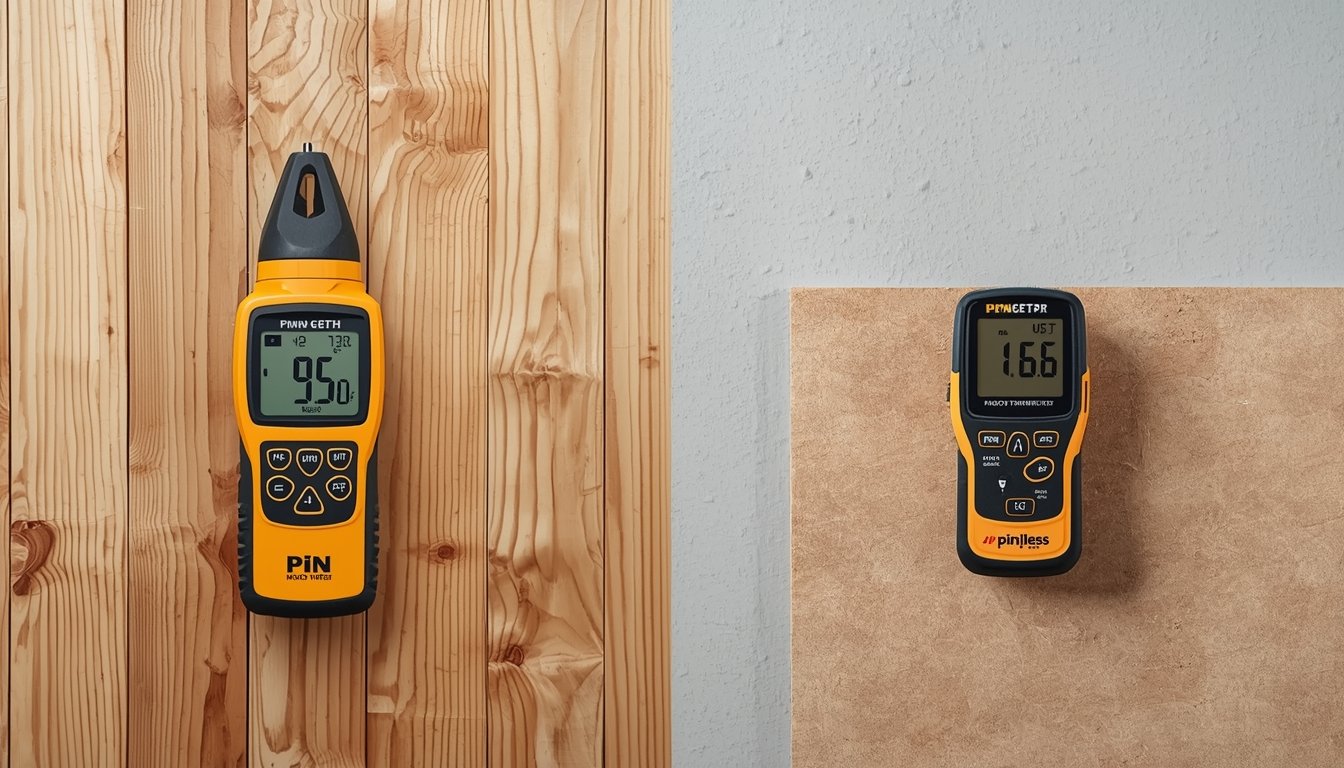
You don’t strictly need a moisture meter for a home inspection, but it is one of the most useful tools for detecting hidden moisture problems. Without one, you’re relying only on visible signs, which often miss issues behind walls, floors, or ceilings.
In practice, a moisture meter helps you identify problems early, before they become costly repairs or visible damage.
Why a Moisture Meter Is Useful During Inspections
Most moisture problems develop out of sight. Leaks, condensation, and damp can exist behind surfaces long before any visible signs appear. A moisture meter allows you to detect these issues early by measuring what’s happening inside materials.
This is especially important during home inspections, where the goal is to identify potential problems before buying, selling, or repairing a property.
- Detect hidden moisture: Finds damp areas behind walls and under floors
- Confirm visible issues: Verifies whether stains or marks indicate active moisture
- Compare different areas: Helps identify unusual readings across a room
- Prevent costly damage: Early detection reduces repair costs
For example, a wall may look dry but show elevated readings, indicating a hidden leak. Without a meter, this issue could go unnoticed until it becomes more serious.
This makes moisture meters especially valuable for identifying problems that aren’t obvious during a standard visual inspection.
When You Should Use One in a Home Inspection
While not always required, a moisture meter is highly recommended in situations where moisture problems are more likely or more costly if missed.
Using one in these scenarios gives you a clearer understanding of the property’s condition and helps avoid unexpected repairs.
- Buying a home: Helps identify hidden issues before purchase
- After water damage: Confirms whether materials have fully dried
- Inspecting high-risk areas: Bathrooms, kitchens, basements, and roofs
- Checking for damp or mold risk: Identifies areas with elevated moisture levels
Even in homes that appear well-maintained, moisture problems can still exist behind surfaces. Testing these areas provides reassurance or highlights issues that need attention.
If you’re unsure how to interpret readings during an inspection, it helps to understand moisture meter readings and scales, so you can make informed decisions based on the results.
Is It Worth Using One for Basic Checks?
For basic inspections, a moisture meter is not essential, but it adds a level of accuracy that visual checks alone cannot provide. It allows you to confirm whether an area is truly dry rather than relying on guesswork.
This is particularly useful in homes where moisture issues may not be immediately obvious but could develop over time.
- Without a meter: You rely on visible signs like stains or smells
- With a meter: You can detect issues before they become visible
- For homeowners: Useful for ongoing monitoring and maintenance
A common mistake is assuming that no visible signs mean no problem. In reality, moisture can exist beneath surfaces without showing clear symptoms.
By using a moisture meter during inspections, you gain a more complete understanding of the property and reduce the risk of missing hidden issues.
In most cases, the small investment in a moisture meter is worth it for the added confidence and early detection it provides.