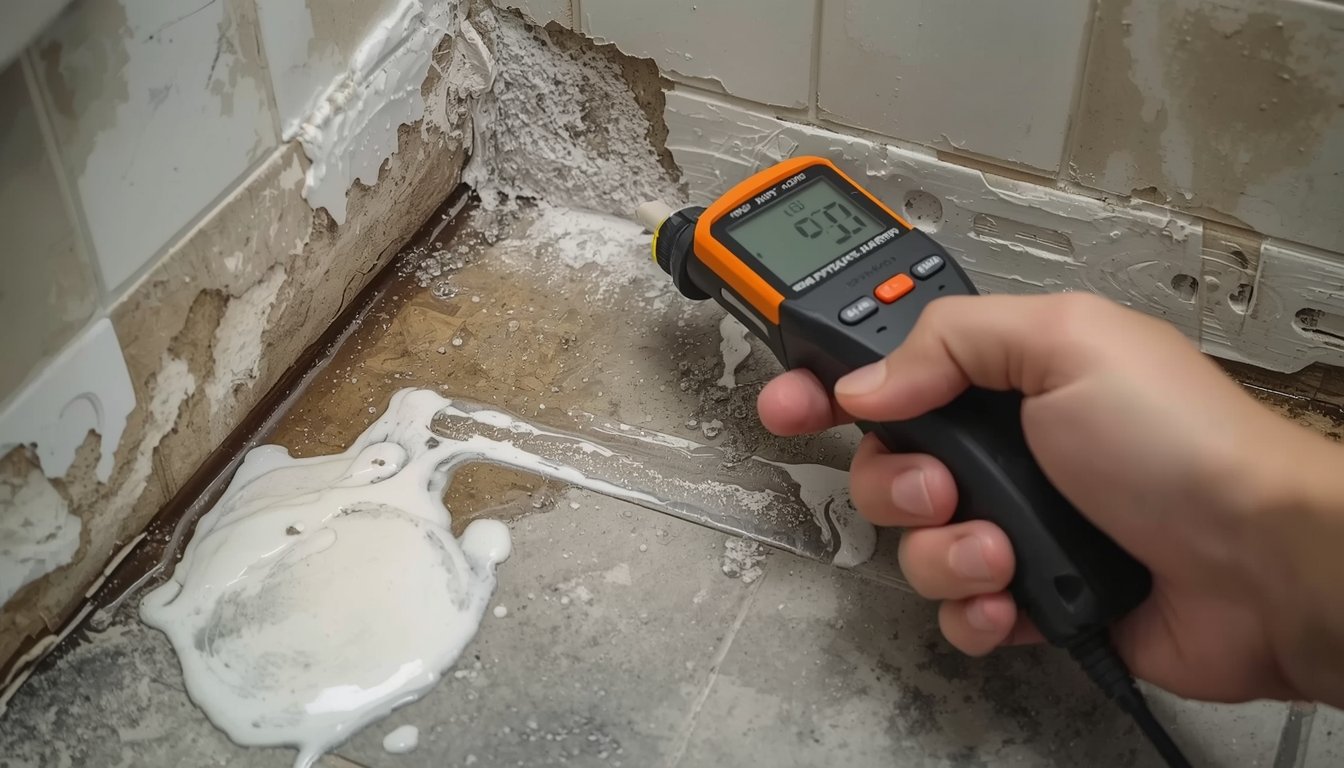
Pin and pinless moisture meters are the two main types used to detect moisture in building materials, and each works in a different way. Neither is universally better—the right choice depends on how you plan to use it and what level of accuracy you need.
Understanding the differences between them helps you avoid misleading readings and choose the right tool for your situation. If you’re new to moisture testing, it’s worth first understanding how moisture meters work and when to use them so you can interpret results properly.
How Pin Moisture Meters Work
- Probe-based measurement: Two metal pins are inserted into the material
- Electrical resistance: Moisture affects how electricity flows between the pins
- Depth-specific readings: Measures moisture at the exact point of contact
- Direct contact required: Pins must penetrate the surface
Pin moisture meters measure moisture by sending a small electrical current between two probes. The resistance between the probes changes depending on how much moisture is present in the material.
This method provides highly accurate readings at a specific point. Because the pins are inserted into the material, the meter measures internal moisture rather than just surface conditions.
This makes pin meters especially useful for confirming moisture levels in wood or other materials where precise readings are important.
However, the need to insert pins means the surface will be slightly damaged. This can be a concern when testing finished materials such as flooring or decorative surfaces.
Pin meters are best used when accuracy at a specific location is more important than speed or convenience.
How Pinless Moisture Meters Work
- Surface scanning: Uses sensors placed flat against the material
- Electromagnetic signals: Detects changes in density caused by moisture
- Non-invasive testing: No damage to the surface
- Wide-area coverage: Ideal for scanning large sections quickly
Pinless moisture meters use electromagnetic signals to detect moisture beneath the surface. Instead of penetrating the material, the meter scans an area and measures how moisture affects the signal.
This allows you to test surfaces quickly and without causing any damage. It’s particularly useful for finished walls, floors, and ceilings where preserving the surface is important.
Pinless meters are ideal for identifying areas where moisture may be present. Once a problem area is located, further testing can be done if needed.
However, readings can be influenced by surface conditions, material density, or hidden objects such as metal. This means they may be slightly less precise than pin meters in certain situations.
Despite this, pinless meters are often preferred for general home use because of their speed and ease of use.
Accuracy Differences Between Pin and Pinless Meters
Accuracy is one of the main factors people consider when choosing between pin and pinless moisture meters. While both can be accurate, they measure moisture in different ways.
Pin meters are generally more precise because they measure moisture directly at a specific depth. This makes them ideal for confirming exact moisture levels, especially in wood.
Pinless meters, on the other hand, provide a broader view by scanning an area. They are excellent for detecting patterns and identifying where moisture may be present, but the readings may be influenced by surface conditions.
For example, a pinless meter may show elevated readings over a large area, while a pin meter can confirm whether the moisture is actually present at a specific point.
The key is understanding that both types are accurate in their own way. Pin meters offer precision, while pinless meters offer coverage.
Using them together can provide the most complete picture of moisture in a material.
Pros and Cons of Each Type
Choosing between pin and pinless meters often comes down to balancing convenience and accuracy. Each type has strengths and limitations that affect how it performs in real-world situations.
Understanding these pros and cons helps you select the right tool for your needs.
Pin meters are best for detailed testing, while pinless meters are better for quick scanning. The decision depends on whether you need precise measurements or broader coverage.
In many cases, homeowners prioritise ease of use, while professionals may focus more on accuracy.
Both types can be effective when used correctly, but knowing their limitations is important to avoid misinterpreting readings.
This is why many users rely on a combination of both methods when diagnosing moisture problems.
When to Use Each Type of Moisture Meter
The best moisture meter depends on the situation. Different tasks require different approaches, and choosing the right tool improves both speed and accuracy.
Pinless meters are ideal for scanning large areas and identifying potential problem spots. They allow you to quickly check walls, floors, and ceilings without causing damage.
Pin meters are better suited for confirming moisture levels in specific locations. They are particularly useful when you need to know the exact moisture content of a material.
For example, you might use a pinless meter to scan a wall and identify an area with elevated readings. You can then use a pin meter to confirm whether moisture is actually present at that location.
This combination approach provides both coverage and precision, making it easier to diagnose moisture problems accurately.
Choosing the right tool for each task ensures more reliable results and reduces the risk of misinterpretation.
Which One Is Better for Home Use?
For most homeowners, a pinless moisture meter is the better starting point. It is easier to use, faster, and does not damage surfaces.
Pinless meters are particularly useful for routine checks and general inspections. They allow you to quickly scan multiple areas and identify where moisture may be present.
However, if you need more precise readings or want to confirm a suspected issue, a pin meter can be a valuable addition.
The best option for many users is having access to both types. This allows you to combine the strengths of each and get a more complete understanding of moisture in your home.
A common mistake is assuming one type is always better. In reality, each serves a different purpose, and understanding when to use each is the key to accurate testing.
By choosing the right tool for your needs, you can detect moisture problems more effectively and avoid unnecessary damage or confusion.