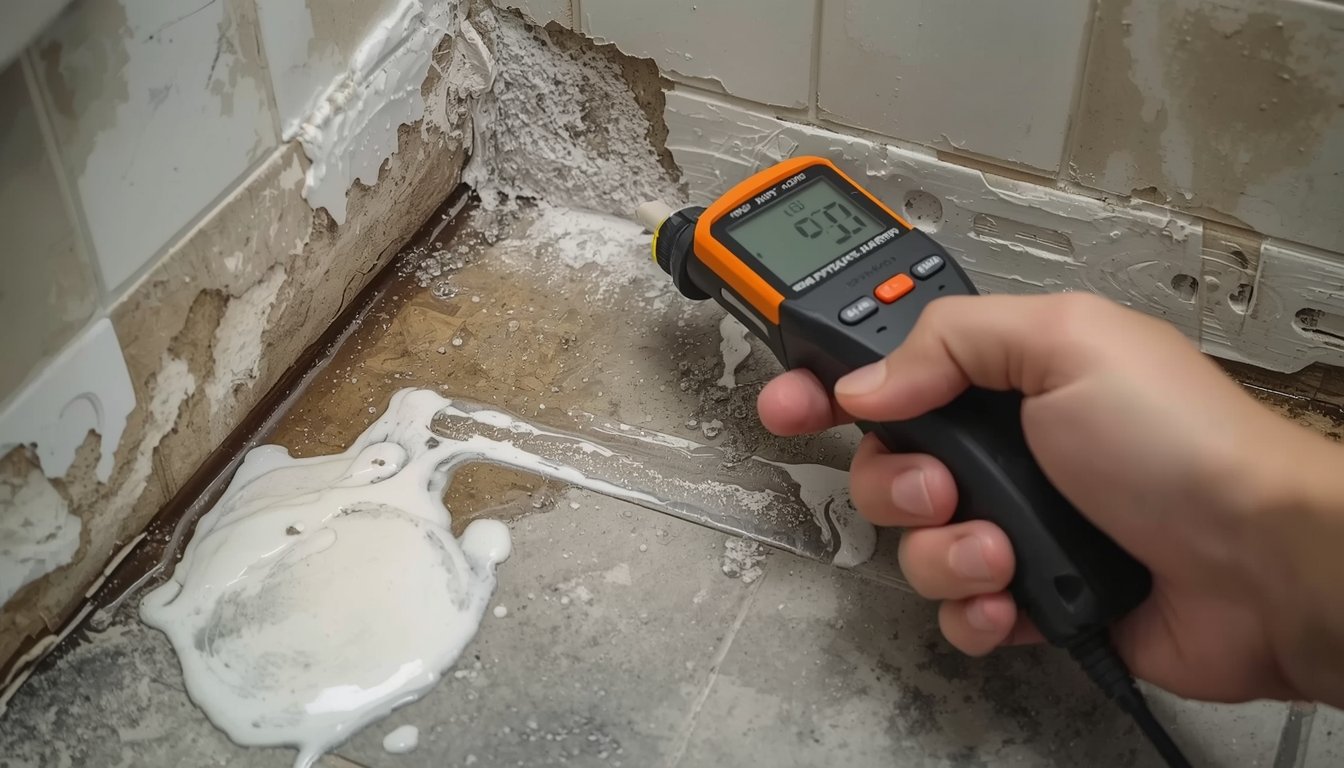
Pin vs Pinless Moisture Meters: Which One Should You Use?
Pin and pinless moisture meters are the two main types used to detect moisture in building materials. Both are effective, but neither is universally better. The right choice depends on what you are testing and how you plan to use the meter.
Pin meters are designed for precise, location-specific readings, while pinless meters are better suited to scanning larger areas quickly without damaging the surface. Understanding how each type works helps you choose the right tool and avoid misleading results.
Key Differences Between Pin and Pinless Moisture Meters
The main difference between these two types is how they measure moisture.
- Pin meters: Use metal probes inserted into the material to measure electrical resistance
- Pinless meters: Use electromagnetic signals to scan below the surface without penetration
- Pin meters: Provide precise readings at a specific depth
- Pinless meters: Allow fast scanning across large areas
In practical use, pinless meters are often used first to locate potential problem areas, while pin meters are used afterward to confirm moisture at a specific point.
For a breakdown of which models perform best in real-world use, see our guide to the best moisture meters.
How Pin Moisture Meters Work
Pin moisture meters measure moisture by sending a small electrical current between two probes inserted into the material. The resistance between the probes changes depending on the moisture level.
- Direct contact with the material is required
- Measures moisture at the exact point of contact
- Provides more precise internal readings
- Leaves small holes in the surface
This makes pin meters especially useful for wood, flooring, and situations where exact moisture content matters.
How Pinless Moisture Meters Work
Pinless moisture meters use sensors placed against the surface to detect moisture through electromagnetic signals. These signals respond to changes in density caused by moisture.
- No surface penetration required
- Allows fast scanning across larger areas
- Ideal for finished walls, ceilings, and floors
- Readings can be influenced by surface conditions
Pinless meters are commonly used for general inspections because they are faster and easier to use without causing damage.
Accuracy Differences
Both types can be accurate, but they measure moisture in different ways.
Pin meters: More precise for specific locations because they measure internal moisture directly.
Pinless meters: Provide a broader overview by scanning an area, but readings can be influenced by material density or surface conditions.
For example, a pinless meter may show elevated moisture across a wall, while a pin meter can confirm whether moisture is actually present at a specific point.
The key difference is that pin meters offer precision, while pinless meters offer coverage.
Pros and Cons of Each Type
Pin Moisture Meters
- Advantages: More precise readings, better for confirming moisture depth
- Disadvantages: Leave small holes, slower to use, limited coverage
Pinless Moisture Meters
- Advantages: Fast scanning, no surface damage, easy to use
- Disadvantages: Slightly less precise, affected by surface conditions
When to Use Each Type
The best choice depends on the task rather than one type being better overall.
- Use pinless: When scanning large areas such as walls, ceilings, and floors
- Use pin: When confirming moisture at a specific location
- Use both: For the most complete and reliable results
A common approach is to scan first with a pinless meter to identify problem areas, then use a pin meter to confirm moisture at those exact points.
Which Is Better for Home Use?
For most homeowners, a pinless moisture meter is the better starting point. It is faster, easier to use, and does not damage surfaces.
However, a pin meter can be useful if you need more precise readings or want to confirm a suspected issue.
Many users find that having access to both types provides the best results, especially when dealing with ongoing or unclear moisture problems.
Final Comparison
Pin and pinless moisture meters are designed for different purposes:
- Pin meters are best for precision and confirmation
- Pinless meters are best for speed and surface scanning
Choosing the right tool depends on how you plan to use it. In many cases, using both together provides the most accurate and efficient way to detect moisture problems.