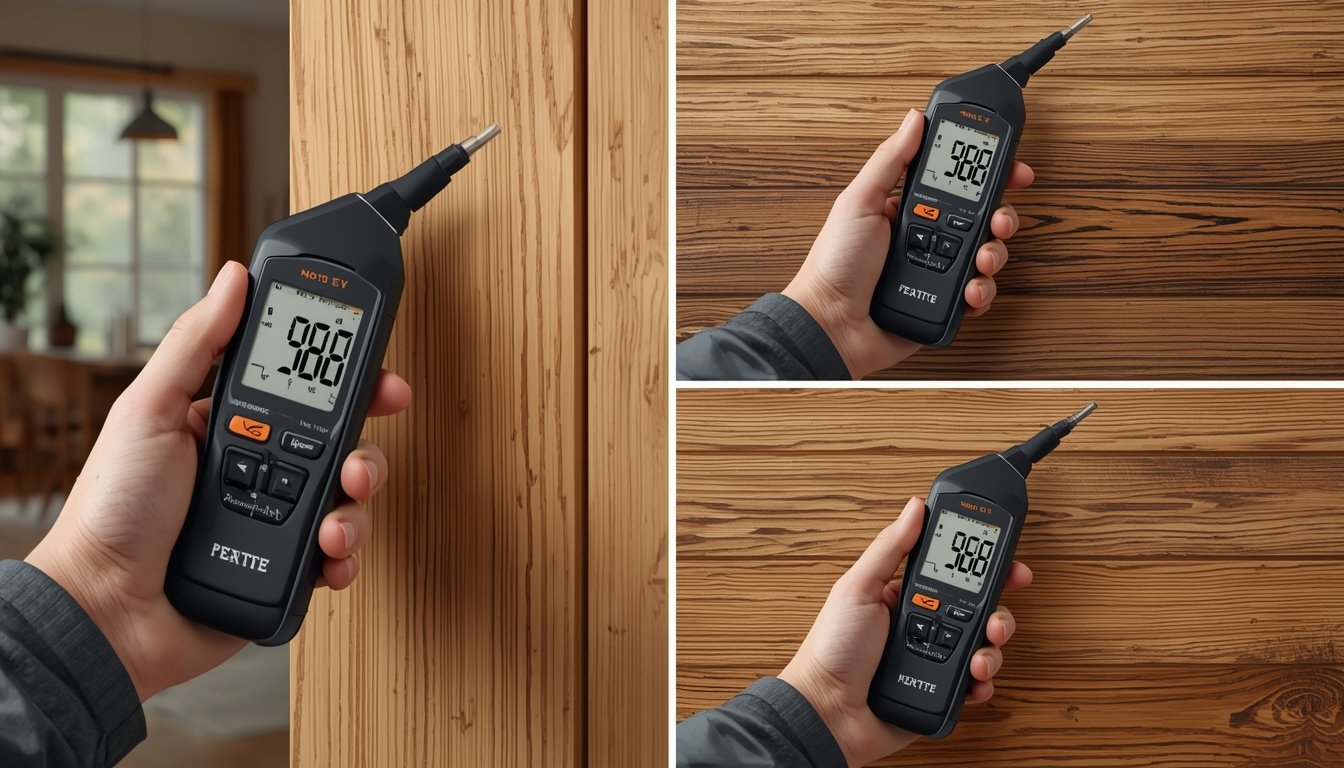
A normal moisture reading for wood is typically between 6% and 12% for indoor environments, and up to 15% for outdoor or construction use. If your reading falls within this range, the wood is generally considered dry and stable.
If readings go above 16–20%, there may be a moisture problem that needs attention, especially indoors.
Normal Moisture Levels for Different Wood Uses
The “normal” range depends on where and how the wood is being used. Moisture levels naturally adjust to the surrounding environment.
- Indoor furniture and flooring: 6% to 10%
- Structural wood indoors: 8% to 12%
- Outdoor wood or framing: 10% to 15%
- Fresh or untreated wood: Can exceed 20% (not considered dry)
In most homes, wood stabilises around 8–12% because of controlled temperature and humidity. If your readings match this range, the material is usually safe to use and unlikely to warp or develop mould.
When a Moisture Reading Is Too High
Higher readings don’t always mean immediate damage, but they do signal a potential issue.
- 12–16%: Slightly elevated, monitor for changes
- 16–20%: Risk of swelling, warping, or hidden moisture problems
- Above 20%: High risk of mould growth and structural damage
In most homes, readings above 16% are worth investigating. This could be caused by leaks, poor ventilation, or recent water exposure. If you’re unsure what those higher numbers mean, it helps to understand moisture meter readings and scales, which gives more context to what your device is showing.
How to Get Reliable Moisture Readings
Accurate readings depend on how and where you test. Small mistakes can lead to misleading results.
- Test multiple areas of the same piece of wood
- Avoid testing near edges or joints only
- Check both surface and deeper readings if possible
- Let the meter stabilise before recording the value
It’s also important to consider recent conditions. For example, wood may temporarily show higher moisture after cleaning, rain exposure, or humidity spikes.
A common issue is assuming one high reading means a serious problem. In reality, consistency across multiple readings is what matters most.
What a “Normal” Reading Really Means
A normal moisture reading isn’t just about hitting a specific number—it’s about stability. Wood that stays within a consistent range over time is far less likely to crack, warp, or develop mould issues.
In most homes, anything between 6% and 12% is considered safe and expected. If your readings are steady within that range, there’s usually no action needed.
If they’re creeping upward or vary significantly across areas, that’s when it’s worth investigating further.