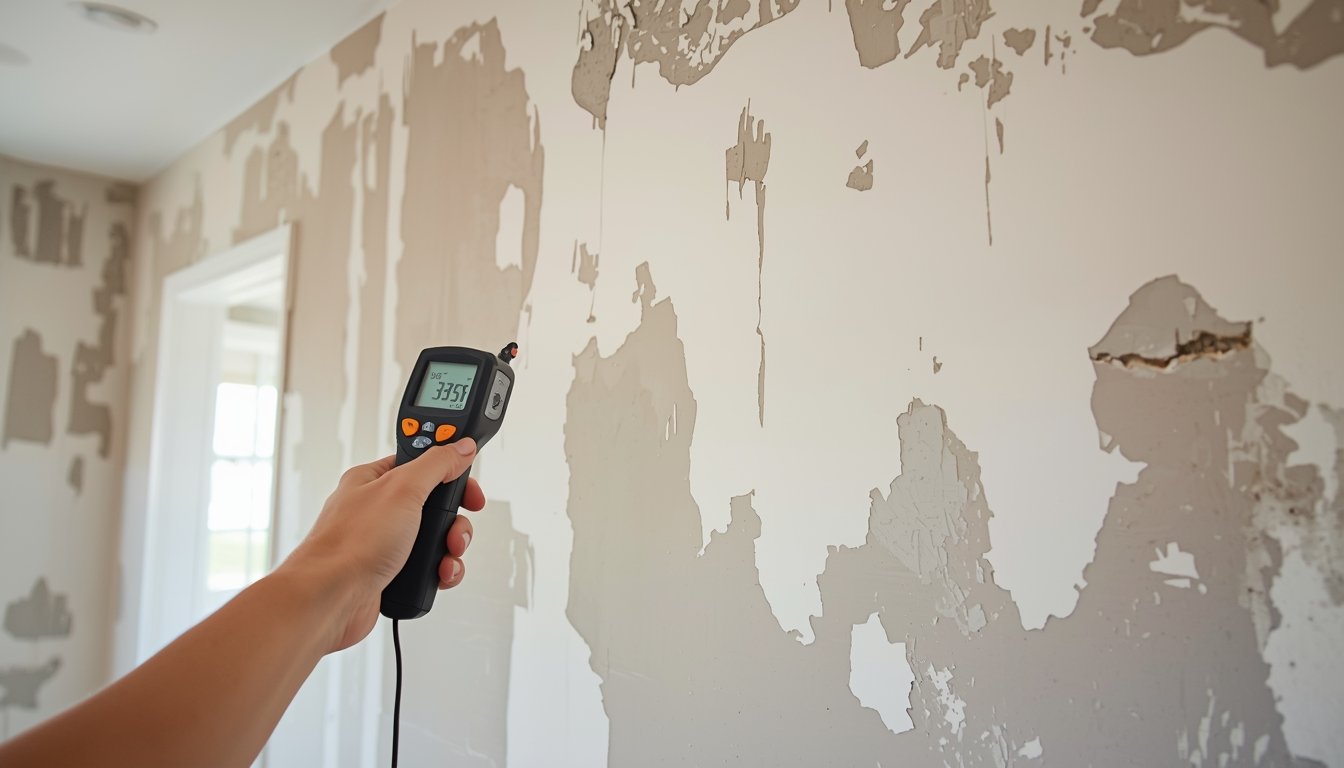
To check for moisture behind walls, use a moisture meter to scan across the surface and look for higher readings compared to surrounding areas. Moisture meters can detect hidden dampness without opening the wall by identifying differences beneath the surface.
The key is to compare readings and focus on patterns rather than relying on a single high value.
How to Detect Moisture Behind Walls Using a Meter
The most effective way to check for hidden moisture is by scanning the wall in a consistent pattern. This helps you identify areas where readings change, which often indicates moisture behind the surface.
Start by testing a known dry area to establish a baseline. This gives you a reference point so you can recognise when readings are unusually high elsewhere.
- Set the meter to the correct material (drywall, plaster, or masonry)
- Place the meter flat against the wall for full contact
- Move slowly across the wall in horizontal and vertical passes
- Compare readings across multiple spots
Hidden moisture usually shows up as a localised increase in readings rather than being evenly spread. For example, a section of wall reading significantly higher than the surrounding area often points to a leak or trapped moisture behind it.
Testing in a grid pattern helps you map out where the problem is, rather than guessing based on one or two readings.
Signs That Moisture Is Present Behind the Wall
Moisture meters are most useful when combined with visual and physical signs. Together, these give a clearer picture of what’s happening behind the wall.
Even if the surface looks dry, hidden moisture can still be present underneath. This is why relying on appearance alone often leads to missed problems.
- Discoloration or dark patches on the wall
- Peeling or bubbling paint
- Soft or slightly spongy areas when pressed
- A musty or damp smell in the room
These signs, combined with elevated readings, strongly suggest that moisture is trapped behind the wall. In many cases, the issue is caused by plumbing leaks, condensation, or water intrusion from outside.
If readings are consistently higher in one area and match these symptoms, further investigation is usually needed to confirm the source.
How to Confirm and Act on High Readings
Once you’ve identified a potential problem area, the next step is confirming whether the moisture is persistent and locating the source.
Start by retesting the same area after some time. If the readings remain high or increase, it’s a strong sign that moisture is still present behind the wall.
- Check nearby areas such as floors, ceilings, or adjacent walls
- Look for possible sources like pipes, windows, or roof leaks
- Monitor readings over several days to track changes
It also helps to understand moisture meter readings and scales, so you can interpret whether the readings indicate a minor issue or something more serious.
A common mistake is assuming the problem is resolved once the surface dries. In reality, moisture can remain trapped inside the wall and continue to cause damage over time.
If readings stay elevated or spread, it may be necessary to investigate further or seek professional help to prevent long-term issues.