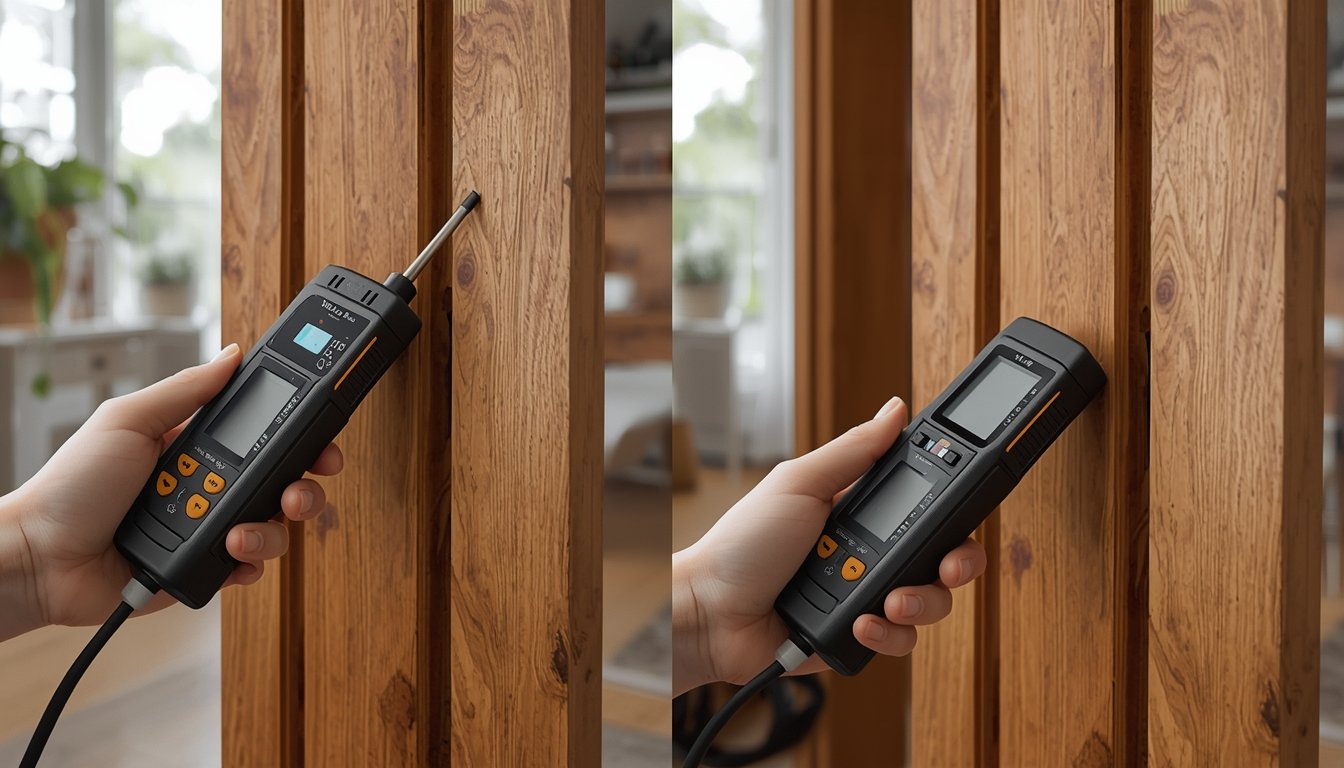
High moisture in drywall is typically anything above 1% to 2% on a drywall scale or elevated readings in the “wet” range on a relative moisture meter. If your meter shows consistently higher readings compared to nearby dry areas, it usually indicates a moisture problem.
Drywall should normally read very low. Any noticeable increase is worth investigating, especially indoors.
What Counts as High Moisture in Drywall
Unlike wood, drywall doesn’t use a universal percentage scale across all meters. Many devices show relative readings or colour-coded zones instead.
- 0–1% (or dry zone): Normal, no concern
- 1–2%: Slightly elevated, monitor
- Above 2%: High moisture, likely issue present
- Wet zone (on meter): Active moisture or water intrusion
A key point is comparison. If one section of wall reads significantly higher than surrounding areas, that difference is often more important than the exact number.
If you’re unsure how your meter displays these values, it helps to understand moisture meter readings and scales, since drywall readings vary depending on the device.
Common Signs of High Moisture in Drywall
Moisture problems in drywall often show both visually and through meter readings. Catching these early can prevent bigger damage.
- Soft or spongy areas when pressed
- Discoloration or dark patches on walls
- Bubbling or peeling paint
- A musty or damp smell
In many cases, drywall can hold moisture beneath the surface even when it looks dry. That’s why a moisture meter is useful—it helps confirm what’s happening internally.
What Causes High Moisture in Drywall
When drywall shows elevated readings, there’s usually a clear source that needs attention.
- Hidden plumbing leaks behind walls
- Roof leaks or water intrusion from outside
- Condensation buildup in poorly ventilated areas
- Recent water damage that hasn’t fully dried
Bathrooms, kitchens, and basements are the most common problem areas because of higher humidity and water exposure.
A common mistake is assuming the issue is resolved once the surface dries. In reality, moisture can remain trapped inside the drywall, continuing to cause damage or support mold growth.
If readings stay elevated over time, it’s important to locate the source and fully dry the material before it deteriorates further.