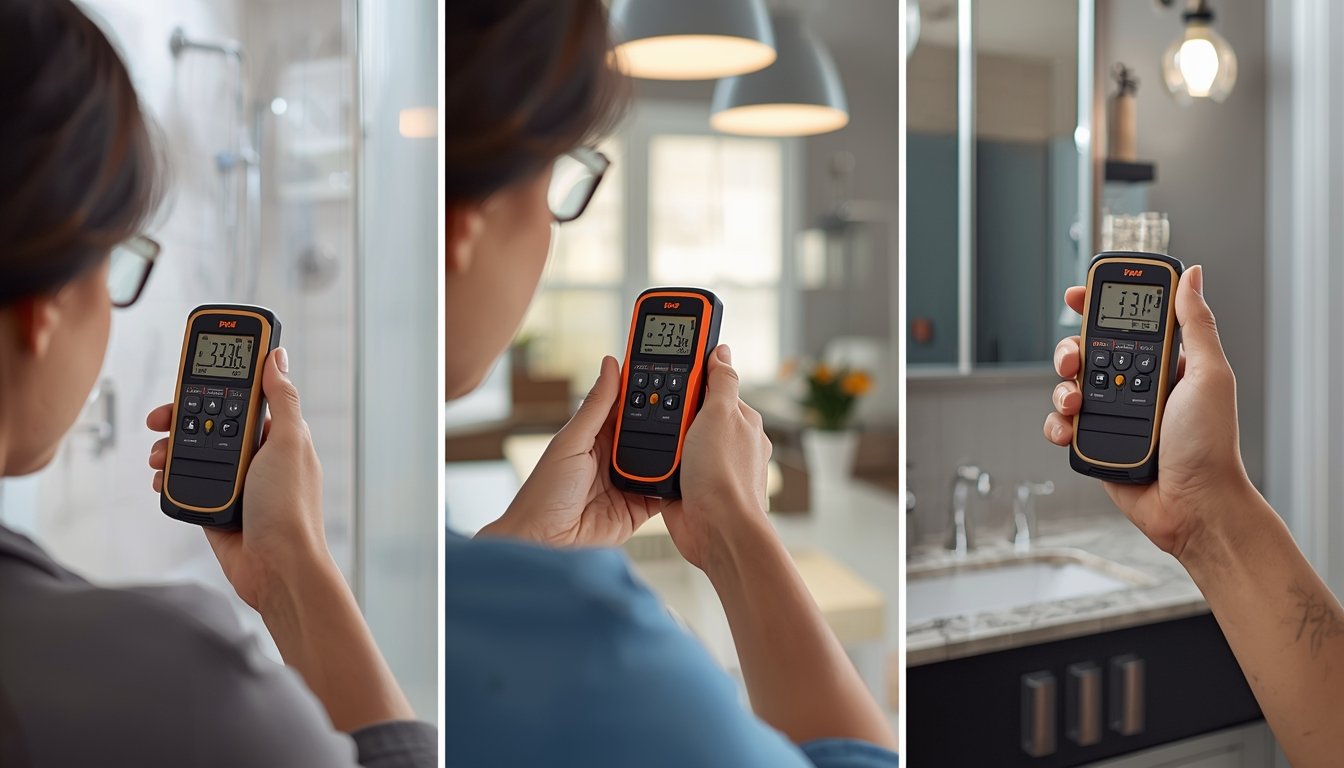
If your moisture meter is not working properly, it’s usually due to incorrect settings, poor contact with the surface, or environmental interference rather than a complete device failure. In many cases, the meter is still functioning, but the readings appear inaccurate or inconsistent because of how it’s being used.
The solution is to check setup, testing conditions, and calibration before assuming the meter is faulty.
Common Reasons a Moisture Meter Stops Working Properly
Most issues with moisture meters come from simple factors that affect how readings are taken. These problems can make the device seem unreliable even when it’s working as intended.
Understanding these causes helps you quickly identify whether the issue is with the meter itself or the testing conditions.
- Incorrect material setting: Using the wrong mode for wood, drywall, or masonry
- Low battery: Weak batteries can cause unstable or inaccurate readings
- Poor surface contact: Uneven placement leads to inconsistent results
- Testing over coatings: Paint, tile, or finishes can interfere with readings
- Interference from metal: Nails, pipes, or wiring behind surfaces
For example, scanning a painted wall with the wrong setting can produce readings that don’t match real moisture levels. This often leads people to think the meter is broken when it’s actually a setup issue.
Before troubleshooting further, it’s important to rule out these common causes.
How to Check If the Meter Is Actually Faulty
You can quickly test whether your moisture meter is working correctly by comparing readings and using known reference points. This helps separate real device issues from normal variation.
Start by testing a clearly dry material, such as indoor furniture or a known dry section of wall. The reading should be low and consistent.
- Test the same spot multiple times to check consistency
- Compare readings across different dry areas
- Check whether readings change significantly without reason
- Look for unusual behaviour like random spikes or constant maximum readings
If the meter gives stable, reasonable readings on dry materials, it is likely working correctly. Problems in other areas are more likely due to environmental factors or testing technique.
If readings are inconsistent everywhere, even on known dry surfaces, the meter may need calibration or servicing.
If you’re unsure how to interpret the readings, it helps to understand moisture meter readings and scales, so you can recognise whether the numbers are realistic.
How to Fix or Improve Meter Performance
Most moisture meter issues can be resolved with simple adjustments. Improving your testing method often restores reliable performance.
Start by ensuring the meter is set up correctly and used consistently across all tests.
- Replace or recharge the battery to ensure stable operation
- Select the correct material setting before testing
- Hold the meter flat and steady against the surface
- Avoid testing near edges, fixtures, or metal objects
Taking multiple readings and comparing results across areas will also help you identify patterns and reduce confusion caused by isolated values.
A common mistake is assuming the meter is faulty after one unusual reading. In reality, most issues are caused by how the meter is used rather than a defect.
By checking settings, improving technique, and confirming results with repeat tests, you can quickly determine whether your moisture meter is working properly and trust the readings it provides.