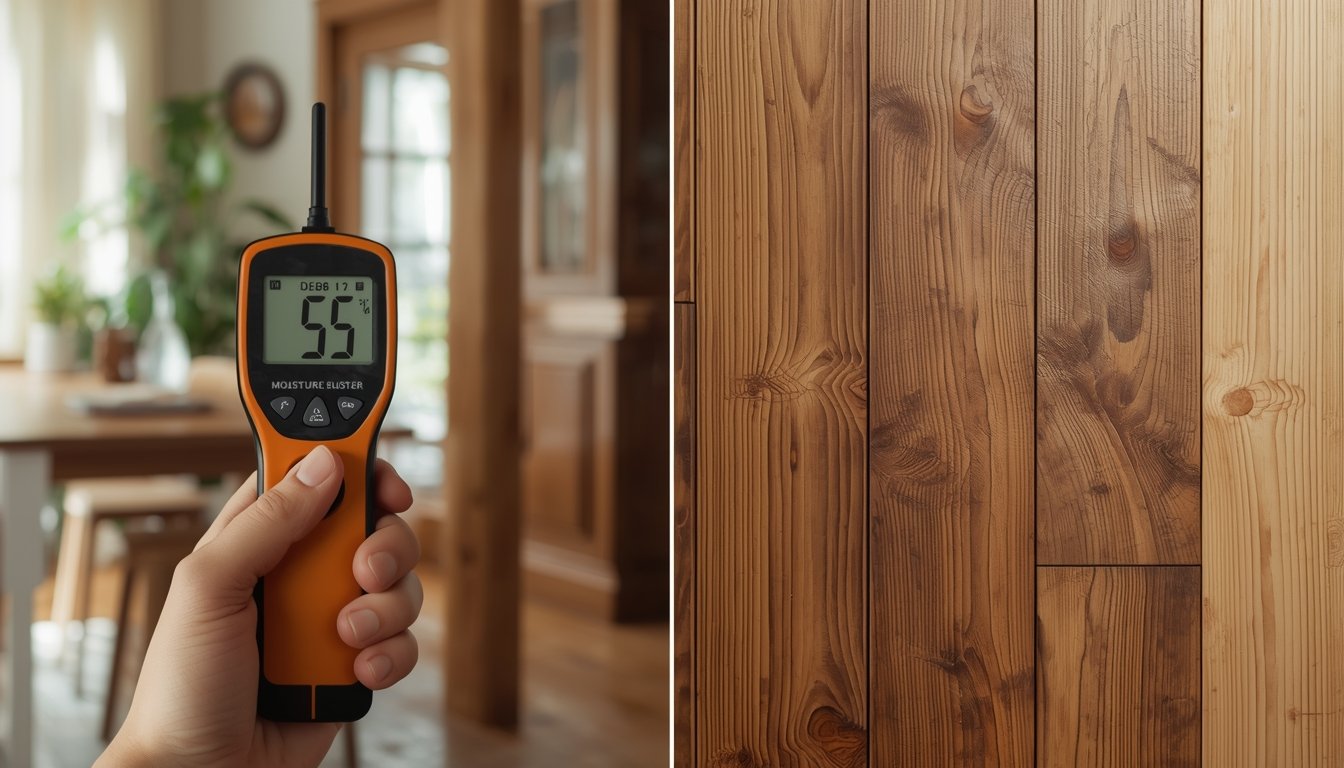
If your moisture readings are inconsistent, it’s usually due to changes in testing conditions, surface differences, or how the meter is being used—not because the moisture itself is constantly changing. In most cases, inconsistent readings point to technique or environmental factors rather than a serious hidden issue.
The solution is to identify what’s affecting the readings and make your testing more consistent.
Common Causes of Inconsistent Moisture Readings
Moisture meters are sensitive tools, and small changes can lead to different results. These are the most common reasons readings vary.
- Different materials: Wood, drywall, and plaster all produce different readings
- Surface vs internal moisture: Some areas may be dry on the surface but damp underneath
- Uneven moisture distribution: Moisture doesn’t spread evenly through materials
- Temperature changes: Cold or warm surfaces can affect readings
- Testing near edges or fixtures: Corners, nails, and wiring can distort results
- Meter placement: Slight changes in position can produce different values
In many homes, it’s completely normal to see some variation. The key is understanding whether the differences are minor or significant.
How to Get More Consistent Results
You can reduce inconsistencies by standardising how and where you take readings. Small adjustments make a big difference.
- Test multiple spots in the same area and compare averages
- Hold the meter flat and steady against the surface
- Avoid testing over painted, sealed, or uneven surfaces
- Use the correct material setting for each surface
Consistency comes from repetition. Taking several readings in the same location helps you identify a reliable range instead of relying on a single number.
If you’re unsure what counts as a meaningful difference, it helps to understand moisture meter readings and scales, so you can interpret variations correctly.
When Inconsistent Readings Indicate a Problem
Not all variation is harmless. In some cases, inconsistent readings can point to a hidden issue.
- Large differences between nearby spots (for example, 10% vs 20%)
- Higher readings concentrated in one specific area
- Readings that increase over time instead of staying stable
These patterns often suggest uneven moisture caused by leaks, condensation, or trapped water behind surfaces.
A common mistake is assuming the meter is faulty when readings vary. In reality, inconsistent readings often reveal where the actual problem is located.
The goal isn’t to get identical numbers everywhere—it’s to identify patterns that show whether moisture is stable or increasing in specific areas.