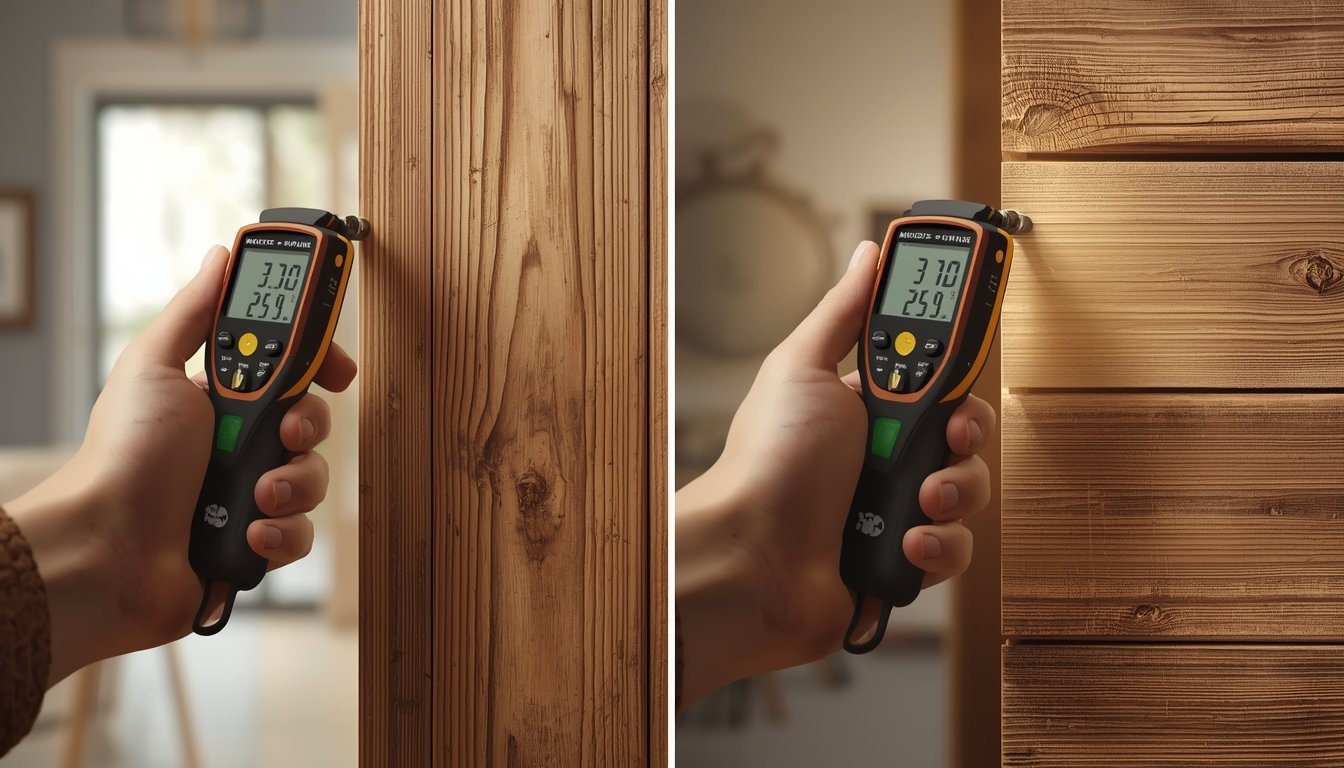
If your moisture meter is showing high readings everywhere, it’s usually caused by environmental factors, incorrect settings, or how the meter is being used—not widespread moisture damage. In most cases, the readings are misleading rather than a sign that every surface is wet.
The key is to identify whether the issue is with the conditions, the device, or the testing method.
Common Reasons for High Readings Everywhere
When readings are consistently high across different areas, there are a few likely explanations. These are often simple to fix once identified.
- High humidity in the room: Moist air can affect surface readings, especially with pinless meters
- Cold or damp surfaces: Temperature differences can trigger higher readings
- Wrong material setting: Using a wood setting on drywall (or vice versa) can skew results
- Testing over paint, tile, or finishes: Some surfaces interfere with accurate readings
- Electrical interference: Wiring or metal behind walls can cause false highs
If every surface shows similar high values, it’s rarely a true reflection of moisture levels. Instead, it usually points to one of these external factors affecting the meter.
How to Check If the Readings Are Accurate
Before assuming there’s a serious moisture problem, you can quickly test whether the readings are reliable.
- Test a known dry material (like interior wood furniture)
- Compare readings across different rooms
- Take multiple readings in the same spot to check consistency
- Move away from edges, corners, and fixtures when testing
If the meter shows high readings even on clearly dry surfaces, the issue is likely with the device or setup rather than the environment.
It also helps to understand moisture meter readings and scales, since different meters display values in ways that can be misinterpreted as “high.”
How to Fix or Reduce False High Readings
Once you’ve identified the cause, small adjustments usually solve the problem quickly.
- Check and adjust the material setting on the meter
- Allow the meter to stabilise before taking readings
- Avoid testing over painted or sealed surfaces where possible
- Reduce humidity by ventilating the area or using a dehumidifier
A common mistake is relying on a single reading. Moisture meters are most useful when you compare multiple readings across different areas to spot patterns.
If readings remain unusually high everywhere even after these checks, the meter itself may need calibration or replacement.