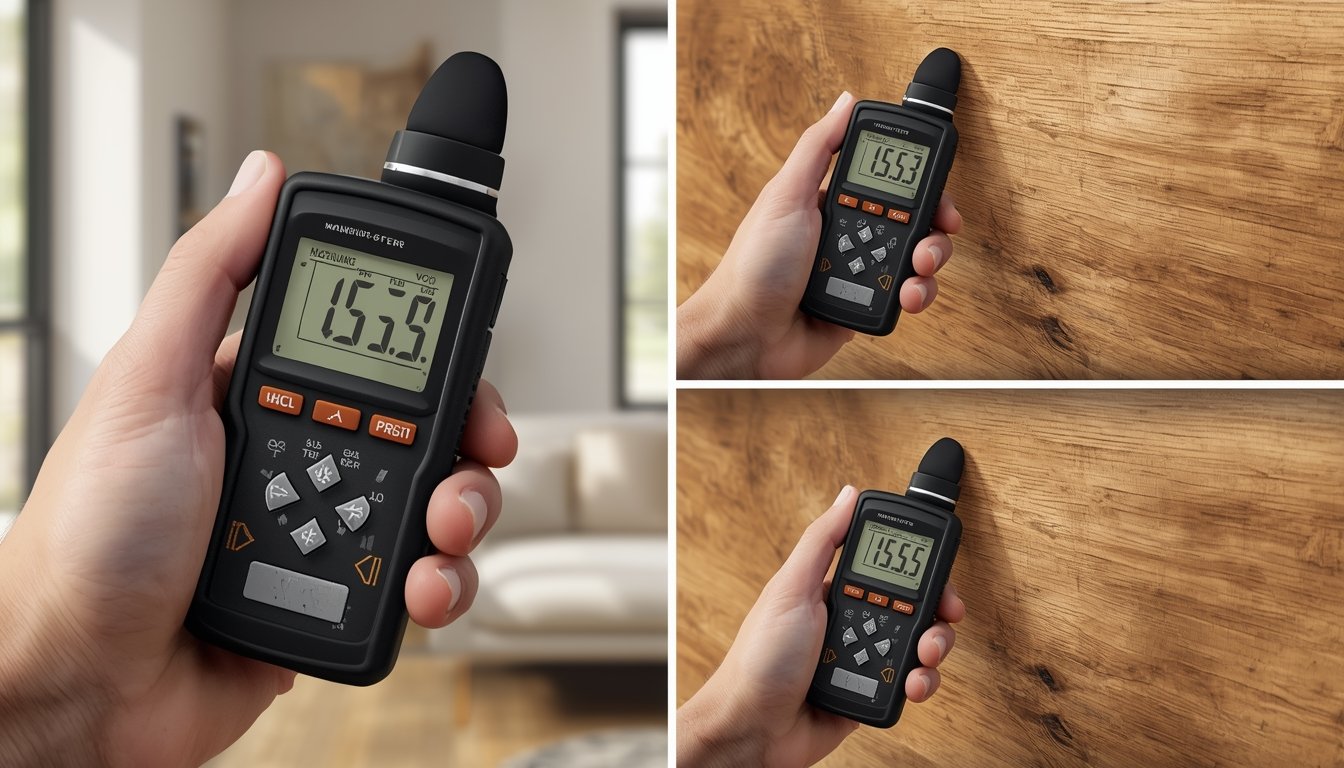
Mold risk typically begins when moisture readings reach around 16% to 20% in wood and similar building materials. Once levels rise above 20%, the risk of active mold growth increases significantly, especially in indoor environments.
If your moisture meter consistently shows readings in this range, it’s a strong sign that conditions are suitable for mold to develop.
Moisture Levels That Increase Mold Risk
Mold needs moisture, oxygen, and organic material to grow. Most homes already have the last two, so moisture level is the key trigger.
- Below 12%: Safe range, mold growth unlikely
- 12–16%: Slightly elevated, low risk but worth monitoring
- 16–20%: Conditions becoming favourable for mold
- Above 20%: High risk of mold growth and material damage
In most indoor settings, anything above 16% should be taken seriously, particularly if the reading remains high over time.
Where Mold Risk Is Highest in a Home
Moisture readings alone don’t tell the full story. Location matters just as much as the number on your meter.
- Bathrooms and kitchens: Frequent humidity and water exposure
- Basements: Poor ventilation and cooler surfaces
- Behind walls: Hidden leaks can go unnoticed
- Around windows: Condensation buildup
These areas are more likely to support mold growth if moisture levels are elevated. Using a moisture meter across multiple spots helps identify patterns rather than relying on a single reading.
If you’re unsure how to interpret those numbers in different materials, it helps to understand moisture meter readings and scales, so you can better judge whether the conditions are risky.
What to Do If Moisture Levels Are Too High
High readings don’t always mean mold is already present, but they do mean action is needed to prevent it.
- Identify and fix the moisture source (leaks, condensation, poor ventilation)
- Dry the affected area using airflow or dehumidification
- Retest after drying to confirm levels have dropped
- Monitor regularly to ensure moisture does not return
A common issue is assuming that once a surface feels dry, the problem is gone. In reality, moisture can remain trapped beneath the surface, continuing to support mold growth.
The key is consistency. If moisture readings stay below 12–15% over time, mold risk drops significantly. If they remain elevated, further investigation is needed.