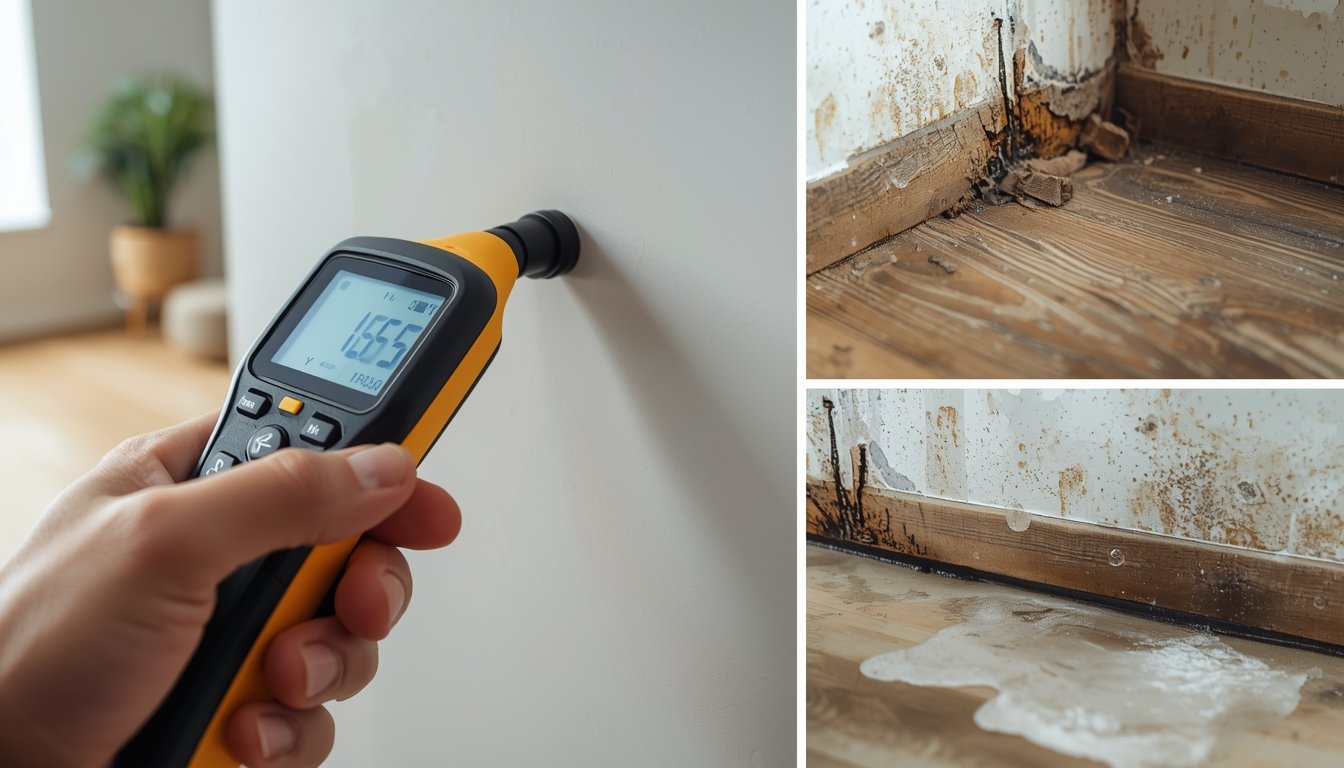
Choosing the right moisture meter depends on how you plan to use it, what materials you’re testing, and how accurate you need the readings to be. The best meter for one situation may not be the best for another, so understanding the key differences helps you make the right decision.
For most homeowners, the goal is to find a meter that is easy to use, reliable, and suitable for common household materials. If you’re starting from scratch, it helps to understand how moisture meters work and when to use them so you can match the tool to your needs.
Step 1: Decide Between Pin and Pinless Meters
- Pin meters: Provide precise readings at a specific point
- Pinless meters: Scan surfaces quickly without causing damage
- Pin meters: Better for detailed testing and confirmation
- Pinless meters: Better for general home inspections
The first decision is choosing between a pin and pinless moisture meter. This choice has the biggest impact on how you will use the device.
Pin meters use probes inserted into the material, which allows them to measure moisture at a specific depth. This makes them more precise, especially for materials like wood.
Pinless meters, on the other hand, are designed for scanning. They allow you to quickly check large areas without damaging surfaces, making them more convenient for everyday use.
For most homeowners, a pinless meter is easier to use and more practical. However, if you need detailed readings in specific areas, a pin meter can be a useful addition.
Understanding this difference helps you choose a meter that matches how you plan to use it.
Step 2: Consider the Materials You Will Be Testing
- Wood: Requires percentage-based readings for accuracy
- Drywall: Often uses relative scales for comparison
- Masonry: May require deeper scanning capability
- Mixed materials: Look for meters with multiple settings
Different materials respond differently to moisture, so the meter you choose should be compatible with what you plan to test.
Wood typically requires more precise readings, often displayed as a percentage. This is important for applications like flooring or structural timber.
Drywall and masonry are usually tested using relative scales, where the focus is on comparing readings rather than relying on exact numbers.
If you plan to test multiple materials, choosing a meter with adjustable settings is important. This allows you to switch between modes and get more accurate results.
Using the wrong setting can lead to misleading readings, so compatibility with your materials should be a key factor in your decision.
Accuracy vs Convenience: What Matters More?
When choosing a moisture meter, you need to balance accuracy and convenience. Both are important, but the right balance depends on your needs.
If you require precise measurements, such as confirming moisture levels in wood, a more accurate meter is essential. Pin meters are often better suited for this purpose.
If your goal is to quickly identify potential problem areas, convenience becomes more important. Pinless meters allow you to scan surfaces quickly and easily.
For most homeowners, convenience is often the priority. Being able to quickly check multiple areas makes it easier to identify issues early.
However, relying solely on convenience can sometimes lead to less precise results. This is why understanding how to interpret readings is important.
Choosing the right balance ensures that your meter is both practical and effective for your specific needs.
Key Features to Look For
Beyond the type of meter, certain features can improve usability and accuracy. These features can make a significant difference in how easy the meter is to use.
Material settings are one of the most important features. They allow you to adjust the meter for different surfaces, improving accuracy.
A clear display is also important. Being able to read values easily helps you compare readings quickly and identify patterns.
Some meters include audible alerts that indicate high moisture levels. This can be useful when scanning large areas.
Detection depth is another factor to consider. Some meters can detect moisture deeper within materials, which is useful for identifying hidden issues.
Choosing a meter with the right features ensures that it is both effective and easy to use.
How Your Use Case Affects Your Choice
Your specific situation plays a major role in determining the best moisture meter for you. Different use cases require different features and levels of accuracy.
If you are a homeowner doing occasional checks, a simple and easy-to-use meter is usually sufficient. A pinless meter is often the best choice in this case.
If you are dealing with ongoing moisture issues, you may need a more accurate meter to monitor changes over time.
For more detailed inspections, such as checking structural materials, a pin meter may be more appropriate.
In some cases, using both types of meters provides the best results. This allows you to combine quick scanning with precise measurement.
Understanding your use case helps you choose a meter that meets your needs without unnecessary complexity.
Common Mistakes When Choosing a Moisture Meter
Many people choose a moisture meter based on price or features without considering how they will actually use it. Avoiding these mistakes can help you make a better decision.
One common mistake is choosing a meter that is too advanced or too simple for your needs. This can make it harder to use effectively.
Another mistake is ignoring material compatibility. Using a meter that doesn’t support your materials can lead to inaccurate readings.
Focusing only on price can also be misleading. A cheaper meter may not provide consistent results, while a more expensive one may include features you don’t need.
Understanding your requirements before buying helps you avoid these issues and choose a meter that works for you.
Taking the time to choose the right tool ensures more reliable results and a better overall experience.