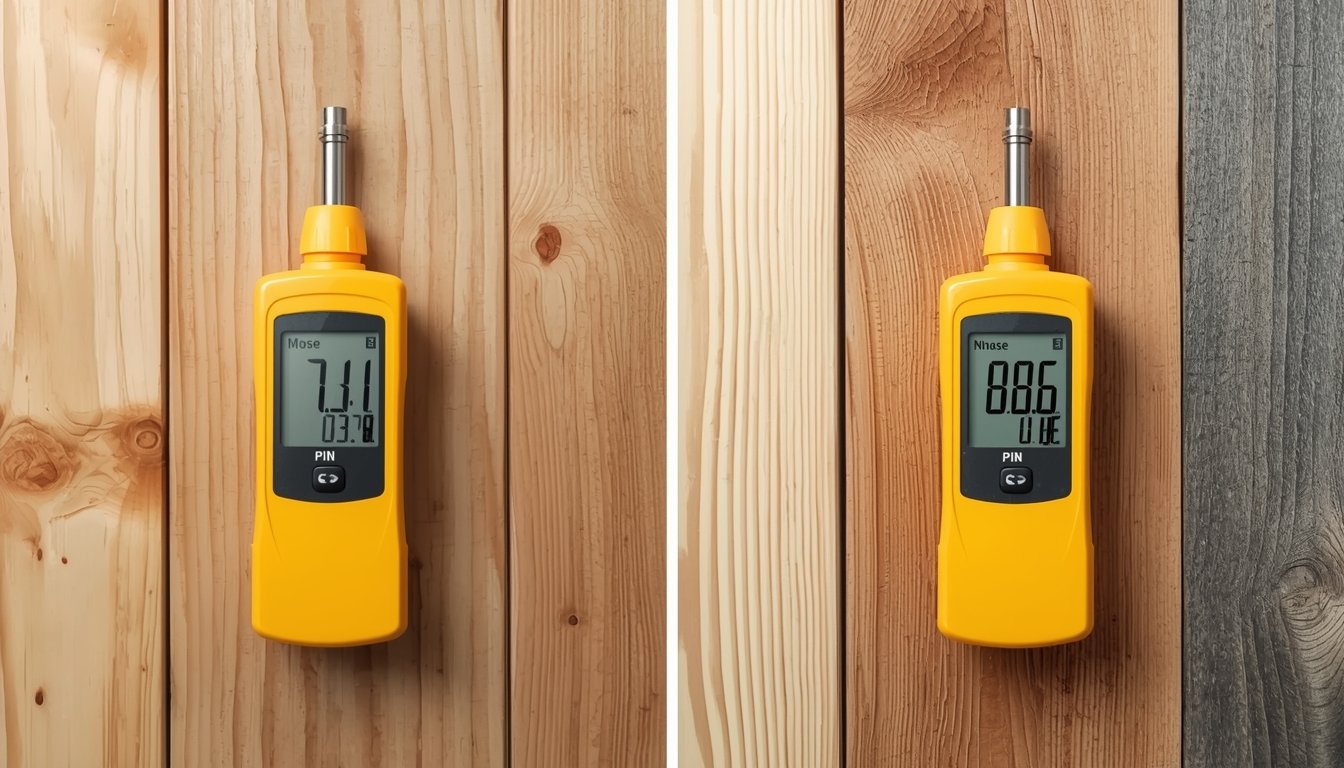
Moisture affects building materials by changing their structure, strength, and durability over time. Materials like wood, drywall, and insulation can absorb water, leading to swelling, weakening, and in some cases long-term damage if the moisture is not controlled.
Understanding how moisture behaves in different materials helps you detect problems early and prevent costly repairs. If you’re unsure how to identify moisture in these materials, it helps to understand how moisture meters work and when to use them so you can test and compare affected areas accurately.
How Moisture Affects Wood
- Expansion and swelling: Wood absorbs moisture and increases in size, which can cause warping or misalignment
- Structural weakening: Prolonged moisture reduces strength and load-bearing capacity
- Cracking and splitting: As wood dries unevenly, it can shrink and crack
- Mold and rot risk: High moisture levels create conditions for fungal growth
Wood is one of the most sensitive building materials when it comes to moisture. It naturally absorbs and releases moisture depending on the surrounding environment, which means it is constantly adjusting to humidity levels.
When moisture levels rise above normal indoor ranges, wood begins to swell. This can lead to visible problems like warped floorboards, sticking doors, or uneven surfaces. Over time, repeated expansion and contraction can weaken the material.
If moisture remains present for long periods, wood can begin to decay. This is especially common in areas with poor ventilation or hidden leaks. Structural timber is particularly vulnerable because damage may not be visible until it becomes severe.
Even small increases in moisture can cause noticeable changes in wood. This is why monitoring moisture levels is important in maintaining flooring, framing, and furniture.
How Moisture Affects Drywall and Plaster
- Softening of material: Drywall loses rigidity when it absorbs moisture
- Surface damage: Bubbling paint and peeling finishes are common signs
- Staining and discoloration: Water marks often appear as dark patches
- Mold growth risk: Damp drywall creates ideal conditions for mold
Drywall is highly vulnerable to moisture because it is made from gypsum, which easily absorbs water. Once moisture enters the material, it begins to soften and lose its structural integrity.
One of the earliest signs of moisture in drywall is surface damage. Paint may bubble or peel, and the wall may develop visible stains. These signs often indicate that moisture is trapped beneath the surface.
Unlike wood, drywall does not recover well once it has been saturated. Prolonged exposure to moisture can cause it to break down permanently, requiring replacement rather than repair.
Hidden moisture behind drywall is a common issue in homes. Even if the surface appears dry, moisture can remain trapped inside, leading to long-term problems if not addressed.
How Moisture Impacts Other Building Materials
Moisture doesn’t only affect wood and drywall. Other materials in your home can also be impacted, sometimes in less obvious ways.
Concrete, for example, can absorb moisture and hold it for long periods. While it may not weaken immediately, it can create damp conditions that affect surrounding materials like flooring or insulation.
Insulation can lose effectiveness when wet. Moisture reduces its ability to regulate temperature, which can lead to higher energy costs and reduced comfort in the home.
Metal components can also be affected. Moisture exposure can lead to corrosion or rust, especially in areas where water is consistently present.
These effects often develop gradually, which is why moisture problems are sometimes overlooked until they become more serious.
Understanding how different materials respond to moisture helps you identify risks early and take appropriate action.
Why Moisture Problems Often Go Unnoticed
One of the biggest challenges with moisture damage is that it often develops out of sight. By the time visible signs appear, the underlying problem may already be well established.
Moisture can enter materials through small leaks, condensation, or humidity. Once inside, it may remain trapped, especially in enclosed spaces like walls or ceilings.
Because the surface can appear dry, many homeowners assume there is no issue. However, moisture meters often reveal elevated readings beneath the surface, indicating hidden problems.
Another reason moisture goes unnoticed is that it spreads unevenly. A small leak may affect one section of a wall while leaving nearby areas unchanged.
This uneven distribution makes it difficult to detect problems without proper testing. Regular checks in high-risk areas can help identify issues before they become visible.
By understanding how moisture behaves, you can avoid relying solely on visual signs and take a more proactive approach.
How to Prevent Moisture Damage in Building Materials
Preventing moisture damage starts with controlling the sources of moisture and monitoring conditions inside the home.
Addressing small issues early is one of the most effective ways to prevent long-term damage. Even minor leaks or condensation can lead to bigger problems if left untreated.
Good ventilation plays a key role in reducing moisture buildup. Areas like bathrooms, kitchens, and basements are especially important to monitor.
Regular inspections also help. Checking walls, floors, and ceilings for early signs of moisture allows you to act before damage spreads.
Using a moisture meter as part of routine maintenance can provide early warning signs. By identifying elevated moisture levels, you can take action before materials begin to deteriorate.
By combining proper ventilation, regular checks, and early intervention, you can protect wood, drywall, and other materials from moisture-related damage.