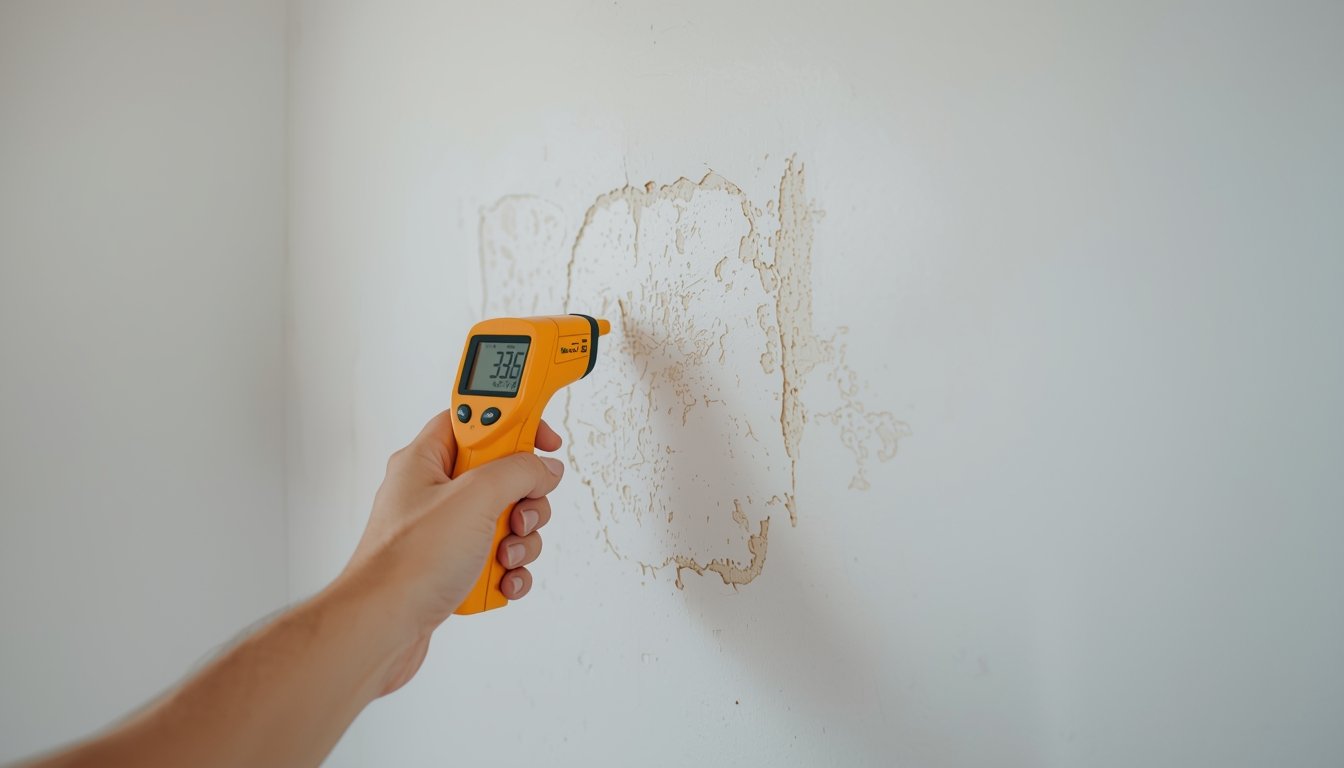
Moisture meters are generally accurate within ±1% to ±2% when used correctly on the right material. However, their real-world accuracy depends more on how they’re used than the device itself.
In most cases, inconsistent or misleading readings come from testing conditions, surface factors, or incorrect settings—not a faulty meter.
How Accurate Moisture Meters Are in Practice
Most moisture meters are designed for practical use, not lab precision. They are highly effective for identifying moisture problems, comparing areas, and tracking changes over time.
- Pin meters: More accurate for measuring internal moisture inside materials
- Pinless meters: Faster and non-invasive, but more affected by surface conditions
- Typical accuracy: ±1% to ±2% for wood, with slightly more variation for drywall and mixed materials
In real-world situations, this level of accuracy is more than enough to detect whether an area is dry, slightly damp, or clearly wet. The goal isn’t perfect precision—it’s identifying meaningful differences.
For example, a consistent reading of 18% in one area compared to 10% in another clearly indicates a problem, even if the exact numbers are not perfectly exact.
This is why professionals rely on moisture meters as comparison tools rather than exact measurement devices.
What Affects Moisture Meter Accuracy
Several factors can influence readings, and these often have a bigger impact than the meter itself. Understanding them helps prevent misinterpretation.
- Material type: Wood, drywall, and concrete all require different settings
- Surface coatings: Paint, varnish, or sealants can interfere with readings
- Environmental conditions: High humidity or temperature changes can affect results
- Hidden materials: Metal, wiring, or pipes behind surfaces can cause false highs
- Meter calibration: Devices can drift over time if not checked
A common issue is scanning painted walls or areas near fixtures, where readings appear higher than expected. This doesn’t always indicate moisture—it often reflects surface or structural interference.
If you’re unsure how your meter presents these values, it helps to understand moisture meter readings and scales, so you can interpret results correctly.
Without that context, it’s easy to assume there’s a problem when the reading is actually normal for the material or situation.
How to Improve Accuracy When Testing
You can significantly improve accuracy by using a consistent testing approach. Small changes in technique lead to more reliable results.
- Use the correct material setting before testing
- Take multiple readings in the same area and compare results
- Avoid testing near edges, corners, or metal fixtures
- Ensure the meter is flat and making full contact with the surface
Rather than relying on a single reading, look for patterns across different areas. This helps identify whether moisture is actually present or if the readings are being influenced by external factors.
A common mistake is expecting every reading to be exact. In practice, moisture meters are most effective when used to compare areas and detect changes over time.
When used this way, they are a reliable tool for identifying moisture problems in most home environments.