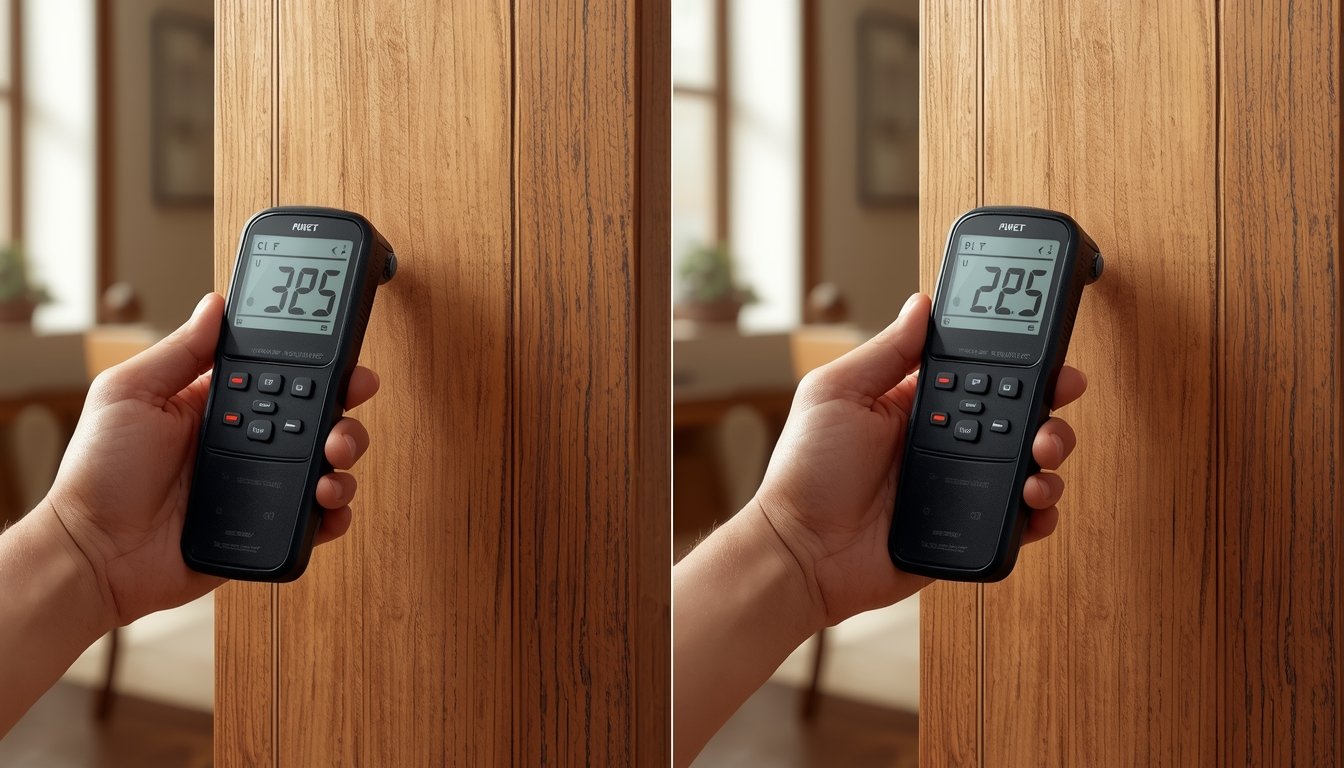
Yes, moisture meters can give false readings, and it happens more often than most people expect. In most cases, the issue isn’t the device itself but how it’s used, what it’s scanning, or the surrounding conditions affecting the result.
The key is knowing what can interfere with readings so you can quickly tell whether you’re seeing a real moisture problem or a misleading result.
Common Causes of False Moisture Readings
False readings usually occur when something interferes with how the meter detects moisture beneath the surface. This can make dry materials appear damp or exaggerate the level of moisture present.
- Surface coatings: Paint, varnish, or sealants can trap moisture signals or reflect them differently
- Metal behind surfaces: Nails, screws, pipes, or wiring can trigger high readings
- High humidity: Moist air can influence readings, especially on walls and ceilings
- Wrong material setting: Using a wood setting on drywall (or vice versa) leads to inaccurate values
- Poor contact with the surface: Gaps or uneven pressure can distort readings
In many homes, a combination of these factors can cause readings to appear high across multiple areas. This often leads people to believe there is widespread moisture when the issue is actually related to testing conditions.
A common example is scanning a painted wall and getting elevated readings due to the coating or hidden wiring, even though the wall itself is dry. Without checking other areas, this can easily be misinterpreted as a serious problem.
How to Tell If a Reading Is False
Identifying false readings comes down to comparing results and looking for consistent patterns. Real moisture problems usually show up in specific areas and remain relatively stable.
- Take multiple readings in the same location and compare results
- Test nearby areas to see if the readings drop or stay consistent
- Check a known dry surface, such as interior wood furniture
- Avoid testing near edges, corners, or fixtures where interference is more likely
If readings change significantly between tests or appear high in clearly dry areas, it’s a strong sign that something is affecting the meter rather than indicating real moisture.
It also helps to understand moisture meter readings and scales, so you can recognise when numbers don’t match real-world conditions.
How to Reduce or Avoid False Readings
Getting reliable results is mostly about consistency. Small adjustments in how you test can eliminate most false readings.
- Use the correct material setting before scanning
- Hold the meter flat and steady against the surface
- Test several spots instead of relying on a single reading
- Avoid scanning over painted, tiled, or metal-backed areas when possible
Instead of focusing on one number, look for patterns across multiple readings. This gives a much clearer picture of whether moisture is actually present.
If readings remain unusual after adjusting your method, the meter may need calibration. However, in most cases, improving your testing approach is enough to resolve the issue.