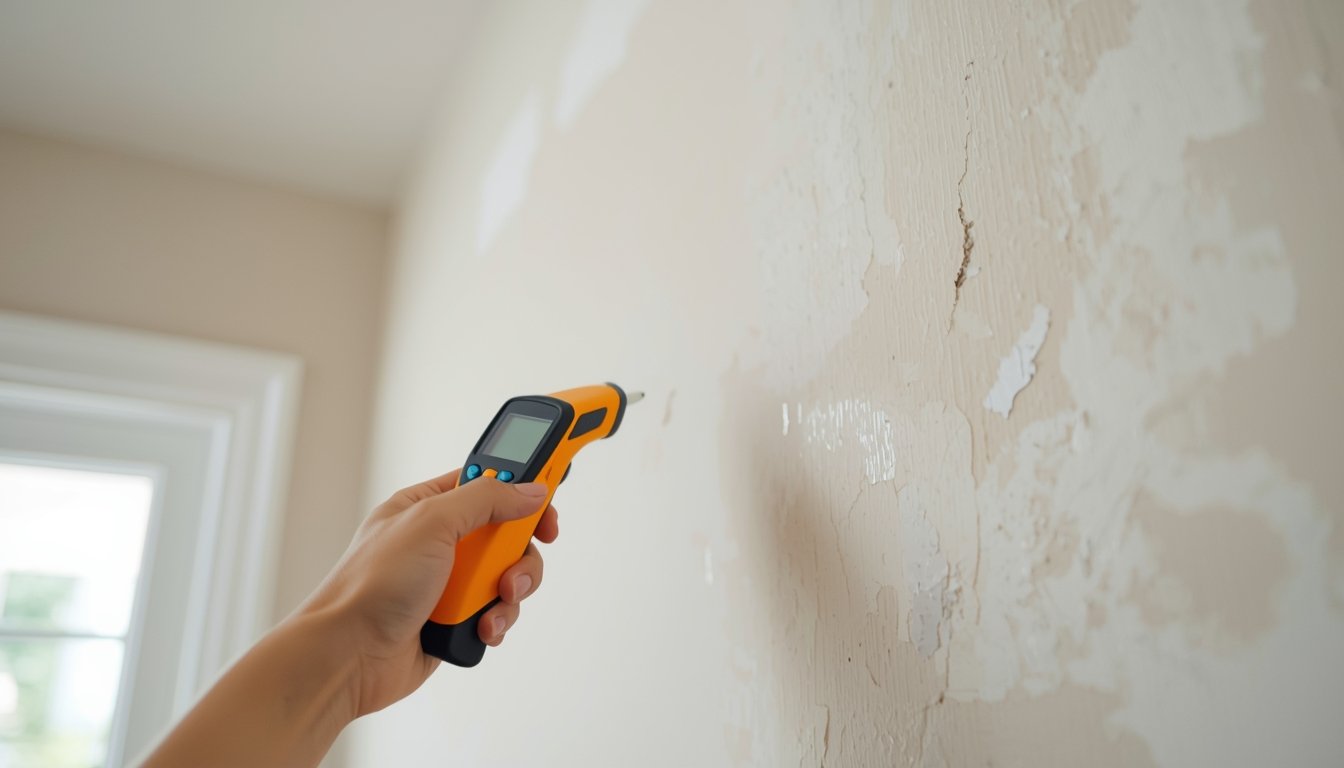
To use a moisture meter on walls, place the sensor flat against the surface and take multiple readings across the area. Focus on comparing values rather than relying on a single number to identify damp spots or hidden moisture.
The goal is to find differences between dry and potentially damp areas, not just one high reading.
Step-by-Step: How to Use a Moisture Meter on Walls
Using a moisture meter correctly is simple, but small mistakes can lead to misleading results. Following a consistent process improves accuracy.
- Set the correct mode: Choose the right setting for drywall, plaster, or masonry
- Start in a known dry area: This gives you a baseline reading to compare against
- Place the meter flat: Ensure full contact with the wall surface
- Scan slowly across the wall: Move in a grid pattern to cover the area evenly
- Take multiple readings: Compare results across different spots
Starting with a dry reference point is important. It helps you understand what “normal” looks like in your home before identifying problem areas.
Moving the meter slowly across the wall allows you to detect changes that might indicate hidden moisture behind the surface.
Where and How to Test for Accurate Results
Where you test matters just as much as how you test. Moisture is often uneven, so checking multiple areas improves reliability.
- Near the floor: Moisture often rises from the base of walls
- Around windows and doors: Common spots for condensation and leaks
- Bathrooms and kitchens: Higher humidity increases risk
- Areas with visible marks: Discoloration or bubbling paint
Always compare readings from suspected problem areas with nearby dry sections. A higher reading in one spot is more meaningful when you know what the surrounding readings are.
If you’re unsure how to interpret those differences, it helps to understand moisture meter readings and scales, so you can judge whether a reading is actually high.
Common Mistakes to Avoid
Many inaccurate readings come from simple mistakes. Avoiding these will make your results much more reliable.
- Testing only one spot and assuming it represents the whole wall
- Scanning too quickly and missing changes in readings
- Testing over painted or tiled areas without adjusting expectations
- Holding the meter unevenly or without full contact
A common mistake is assuming that a single high reading means a serious issue. In reality, patterns across multiple readings are far more important.
Another issue is testing over finishes like paint or tile, which can affect readings depending on the type of meter being used.
By focusing on consistency and comparison, you can quickly identify whether a wall is dry, slightly damp, or likely affected by hidden moisture.