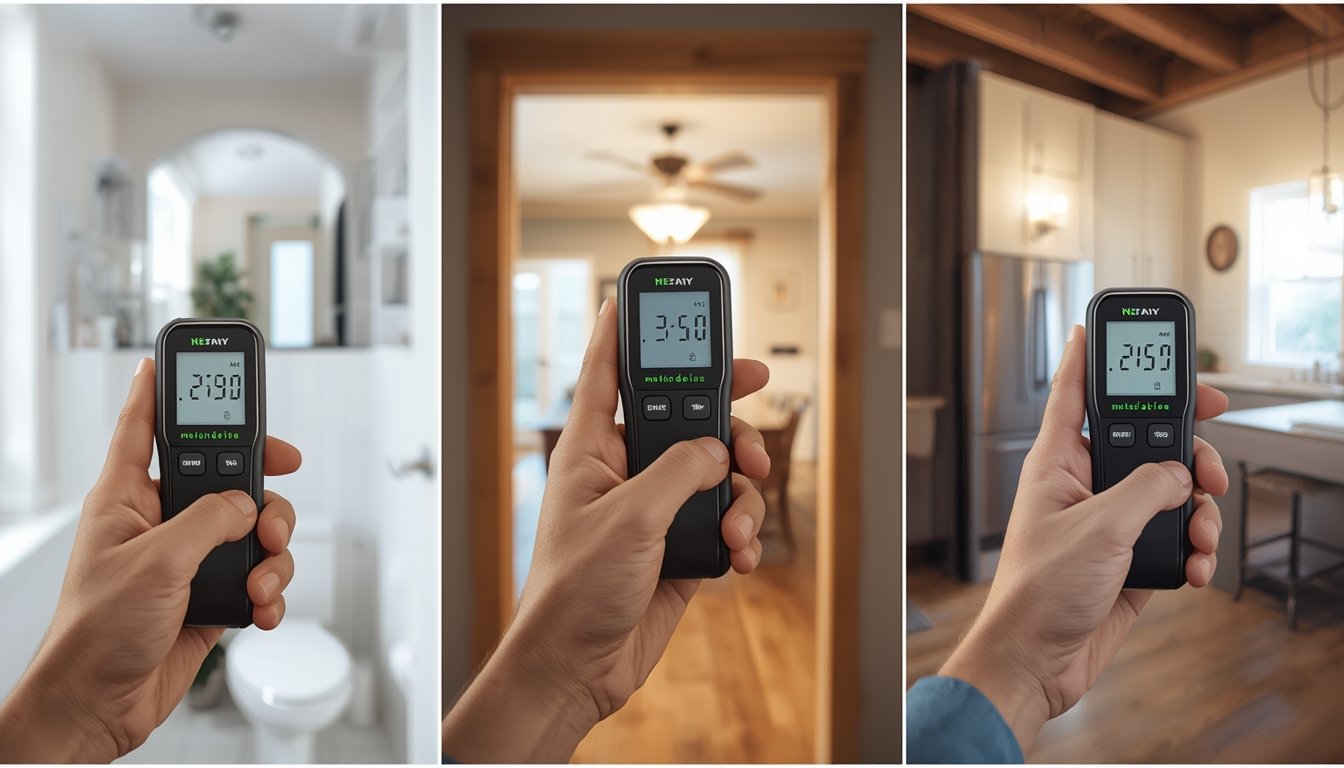
You should use a moisture meter in areas of your home where moisture is most likely to build up or go unnoticed, such as walls, floors, ceilings, and around plumbing fixtures. The goal is to check both visible problem areas and hidden spots where moisture can develop without obvious signs.
By focusing on high-risk locations and comparing readings across different areas, you can quickly identify where moisture may be present.
Key Areas to Check Inside the Home
Moisture problems tend to occur in predictable locations, so starting with these areas makes testing faster and more effective. These spots are more exposed to water, humidity, or poor ventilation.
Begin by scanning surfaces slowly and taking multiple readings to build a clear picture of moisture levels in each space.
- Walls: Especially exterior walls, areas near windows, and spots with visible marks
- Floors: Timber floors, subfloors, and areas near bathrooms or kitchens
- Ceilings: Below bathrooms or roof areas where leaks may develop
- Around plumbing: Under sinks, behind appliances, and near pipes
These locations are often the first places where moisture problems appear. Even if everything looks normal, using a meter can reveal hidden dampness beneath the surface.
Testing across multiple areas also helps you establish what “normal” readings look like in your home.
Hidden and High-Risk Problem Areas
Some of the most serious moisture issues develop in places that aren’t immediately visible. These areas require more focused testing because problems can go unnoticed for long periods.
Using a moisture meter in these locations helps you detect issues early, before they cause structural damage or mold growth.
- Behind walls: Areas with plumbing, insulation, or previous repairs
- Basements and crawl spaces: Higher humidity and limited airflow
- Around windows and doors: Condensation and water entry points
- Near roof lines: Potential leaks or water intrusion from above
In these areas, you’re looking for differences in readings rather than a single high number. A section that reads higher than surrounding areas is often where moisture is trapped.
If you want to confirm hidden moisture, you can check for moisture behind walls to narrow down the source more precisely.
How to Use Readings to Identify Problem Areas
Knowing where to test is only part of the process. Interpreting the readings correctly is what helps you decide whether there’s a real issue.
The most important factor is comparison. Moisture meters are most effective when you use them to compare different areas rather than relying on a single reading.
- Test a dry reference area first to establish a baseline
- Compare readings across multiple spots in the same room
- Look for consistent patterns rather than isolated high values
- Retest areas over time to see if moisture levels change
A common mistake is testing one location and assuming the result applies everywhere. Moisture often develops unevenly, so checking multiple areas gives a much clearer picture.
By focusing on high-risk locations and comparing readings carefully, you can quickly identify whether your home is dry, slightly damp, or developing a moisture problem that needs attention.