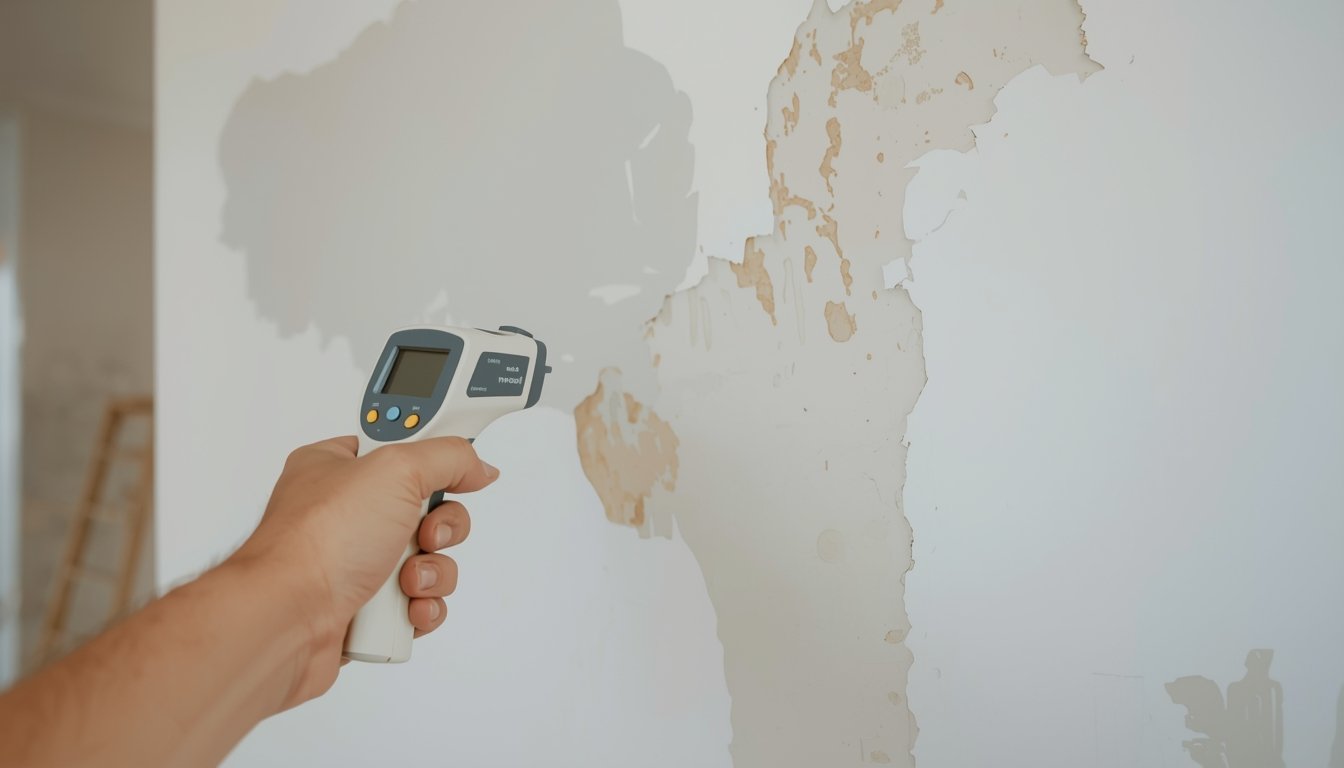
To test for damp in a house, use a moisture meter to scan walls, floors, and ceilings while comparing readings across different areas. Damp is usually identified by higher moisture readings in specific spots rather than evenly across a surface.
The key is to combine meter readings with visible signs and test multiple locations to confirm whether moisture is present.
How to Test for Damp Using a Moisture Meter
The most effective way to test for damp is to use a moisture meter systematically across your home. This allows you to identify areas where moisture levels are higher than normal.
Start by testing a known dry area to establish a baseline. This gives you a reference point so you can recognise when readings are elevated elsewhere.
- Set the meter to the correct material (drywall, wood, or masonry)
- Place the meter flat against the surface for consistent contact
- Scan slowly across walls, floors, and ceilings
- Take multiple readings in each area and compare results
Damp is usually localised, so you’re looking for sections where readings are noticeably higher than surrounding areas. These differences are often more important than the exact numbers.
If you’re unsure what counts as “high,” it helps to understand moisture meter readings and scales, so you can interpret the results correctly.
Common Signs of Damp to Look For
A moisture meter is most effective when used alongside visible and physical signs. These can confirm whether elevated readings are likely to indicate a real problem.
In many homes, damp develops gradually, so early signs may be subtle. Checking for these indicators helps you catch issues before they worsen.
- Dark patches or discoloration on walls
- Peeling or bubbling paint and wallpaper
- A musty or damp smell in certain rooms
- Cold or slightly wet-feeling surfaces
These signs often appear in areas with poor ventilation or frequent moisture exposure, such as bathrooms, kitchens, and basements.
When these symptoms appear alongside higher moisture readings, it strongly suggests damp is present and may need further investigation.
Where Damp Is Most Likely to Occur
Damp doesn’t appear randomly—it tends to develop in predictable locations where moisture builds up or enters the home. Knowing where to test makes the process faster and more effective.
Start with high-risk areas, then expand outward to see how far the moisture has spread.
- Along the base of walls, where rising damp may occur
- Around windows and doors where condensation forms
- Under sinks and near plumbing fixtures
- Ceilings below bathrooms or roofs where leaks may drip down
Testing these areas regularly can help you identify problems early, before they cause visible damage or structural issues.
A common mistake is testing only one location and assuming the rest of the house is dry. Damp often spreads unevenly, so checking multiple areas is essential.
By combining consistent testing with visual checks, you can quickly determine whether damp is present and take action before it becomes a bigger problem.