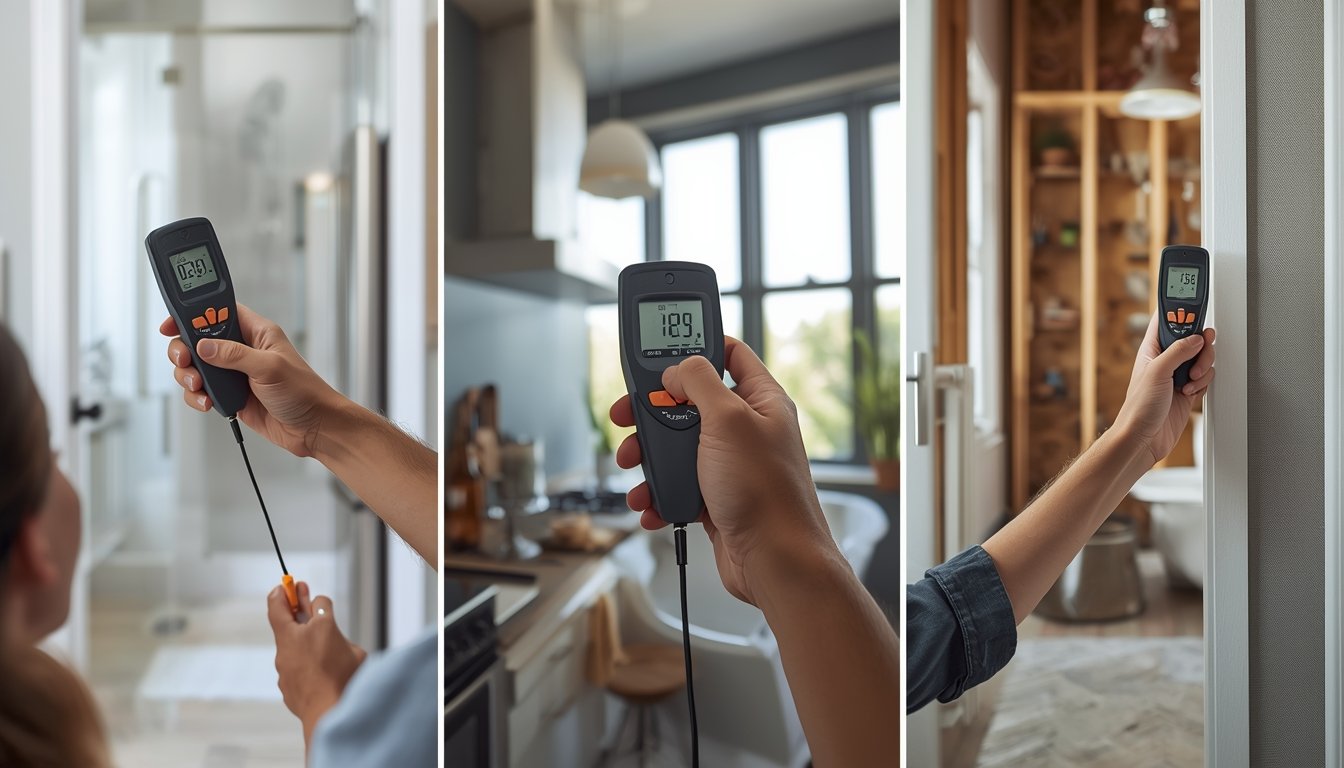
Moisture meters can work through paint and tile to some extent, but the accuracy depends on the type of meter and the material underneath. Pinless meters are better suited for scanning through surfaces, while pin meters require direct contact with the material and won’t work through hard finishes like tile.
The key is understanding the limitations so you can interpret readings correctly and avoid false results.
How Moisture Meters Perform Through Paint and Tile
Paint generally has minimal impact on moisture readings, especially with pinless meters. Most painted walls can still be scanned effectively, allowing you to detect differences in moisture levels behind the surface.
However, tile is a different situation. Tile and similar hard finishes can block or distort readings, making it harder to detect what’s happening underneath.
- Painted surfaces: Usually readable, but thick or glossy coatings may affect accuracy
- Tile surfaces: Often block readings or cause false highs
- Pinless meters: Better for scanning through paint and thin materials
- Pin meters: Require direct contact and cannot penetrate tile
In practice, this means you can usually scan painted drywall with reasonable confidence, but tile surfaces require more caution when interpreting results.
If readings seem unusually high or inconsistent, the surface itself may be influencing the result rather than indicating actual moisture.
Limitations and Common Issues
When testing through paint or tile, several factors can interfere with readings. These limitations are important to understand so you don’t misinterpret the results.
Moisture meters don’t directly “see” through materials—they measure changes in density or electrical resistance, which can be affected by surface layers.
- Surface thickness: Thick paint or tile reduces the meter’s ability to detect underlying moisture
- Air gaps: Adhesives or gaps behind tiles can distort readings
- Reflective surfaces: Some finishes can cause false high readings
- Uneven contact: Tile grout lines and textures affect consistency
For example, scanning a tiled bathroom wall may produce inconsistent readings because of grout lines or the material behind the tile.
If you’re unsure whether the reading is accurate, it helps to understand moisture meter readings and scales, so you can recognise when results may be misleading.
A common mistake is assuming a high reading through tile confirms a leak. In reality, it may simply reflect surface conditions rather than actual moisture.
Best Ways to Get Accurate Results
To improve accuracy when testing through painted or tiled surfaces, you need to adjust your approach and focus on comparison rather than exact values.
Testing nearby exposed materials or edges can also help confirm whether moisture is present behind the surface.
- Compare readings across multiple areas rather than relying on one spot
- Test near edges, corners, or exposed sections where possible
- Use a pinless meter for scanning finished surfaces
- Look for consistent patterns rather than isolated high readings
In many cases, the best approach is to use the meter as a guide. If readings suggest a possible issue, you can then investigate further using other methods or by accessing the material behind the surface.
By understanding how paint and tile affect readings, you can avoid false assumptions and use your moisture meter more effectively in real-world situations.