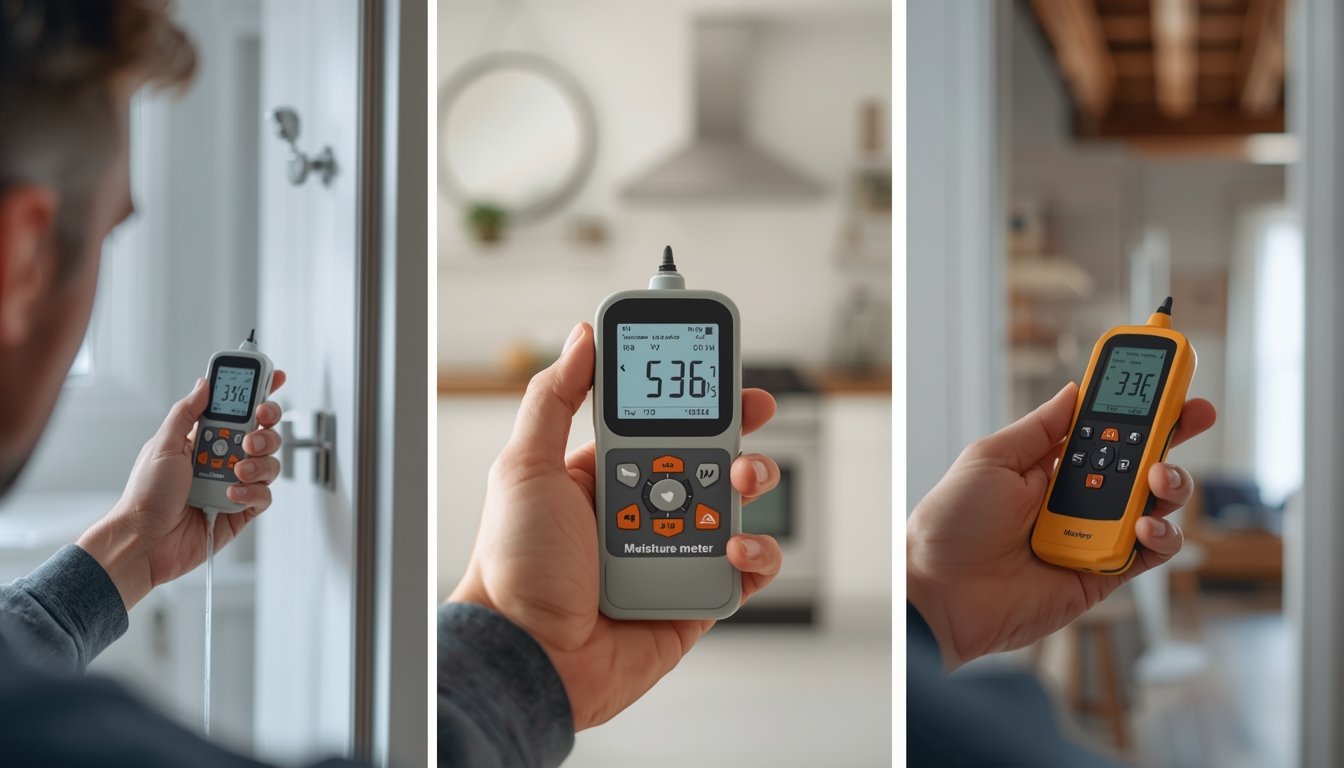
No, a moisture meter cannot detect mold directly. What it does is identify elevated moisture levels in materials, which are the conditions that allow mold to grow.
In practice, a moisture meter helps you find areas at risk of mold, but you still need visual signs or further testing to confirm if mold is actually present.
What a Moisture Meter Can and Cannot Detect
Moisture meters measure the amount of moisture inside materials like wood, drywall, and flooring. They do not identify biological growth such as mold.
Instead, they act as an early warning tool by showing where moisture is present, which is the main factor required for mold to develop.
- Can detect: Elevated moisture levels inside materials
- Cannot detect: Mold spores or mold growth directly
- Can indicate risk: Areas where conditions are suitable for mold
- Useful for: Locating hidden damp spots behind walls or under surfaces
For example, if a wall shows consistently high moisture readings, it suggests that the conditions are right for mold growth, even if no visible signs are present yet.
This makes moisture meters valuable for prevention, helping you address moisture issues before mold becomes a visible problem.
How Moisture Readings Help Identify Mold Risk
Mold needs moisture to grow, so elevated readings are a strong indicator of risk. The higher and more persistent the moisture level, the greater the chance that mold may develop.
When you scan an area and find readings significantly higher than surrounding surfaces, it usually points to trapped moisture that could support mold growth.
- Readings above normal levels for the material
- Consistent high readings in the same location over time
- Higher readings combined with musty smells or visible staining
These patterns are often more important than the exact number displayed on the meter. Moisture that remains over time is what creates the conditions for mold.
If you’re unsure how to interpret these readings, it helps to understand moisture meter readings and scales, so you can determine whether the levels indicate a potential problem.
A common mistake is assuming that a high reading confirms mold. In reality, it only confirms that moisture is present, which means mold could develop if the issue is not addressed.
How to Confirm Mold if You Suspect It
If your moisture meter shows elevated readings, the next step is to confirm whether mold is actually present. This usually involves combining meter results with other signs.
Visual inspection is often the first step, as mold may appear as dark spots, patches, or discoloration on surfaces.
- Look for visible mold growth or staining
- Check for a musty or damp smell in the area
- Monitor whether moisture readings stay high over time
- Consider professional testing if the problem is unclear
In some cases, mold can grow behind walls or under flooring where it isn’t visible. This is where moisture meters are most useful, as they help identify areas that need further investigation.
The key is to act early. If you find high moisture levels, addressing the source quickly can prevent mold from developing or spreading.
By using a moisture meter as a detection tool for risk rather than confirmation, you can manage moisture problems effectively and reduce the chance of mold in your home.